Ask ten marketers what digital marketing means and you will get ten different answers. One will talk about Instagram reels, another about Google Ads, a third about SEO and a fourth about email automation. Each of them is right, but each is describing only one piece of a much larger machine.
Businesses do not grow because of one channel. They grow when research, strategy, messaging, design, websites, content and advertising work together towards measurable results. That joined-up approach is what we call Organic Performance Marketing, or OPM.
This guide explains what Organic Performance Marketing is, how it differs from traditional “performance marketing,” the building blocks behind it and why companies increasingly want marketers who understand the whole system rather than a single tool.
Organic Performance Marketing: A Simple Definition
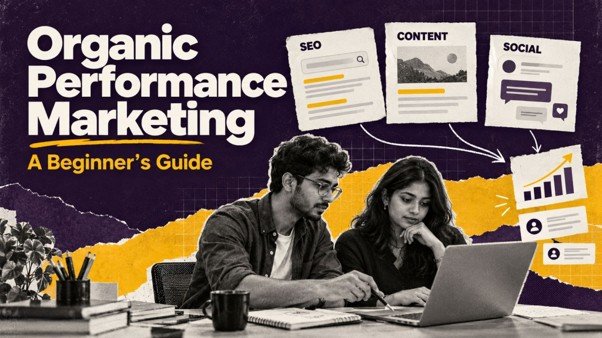
Organic Performance Marketing is a results-driven approach that combines organic growth (SEO, content, brand building and community) with performance channels (paid ads and conversion optimisation), all guided by research, data and strategy.
Break the phrase into its parts:
• Organic refers to growth you earn rather than buy directly: search rankings, useful content, social presence, word of mouth, brand trust and repeat customers.
• Performance refers to marketing that is measured against clear outcomes: leads, sales, cost per acquisition and return on investment.
• Marketing is the full discipline of understanding customers and creating value that brings them to you.
OPM sits where these meet. It asks: how do we build long-term, compounding growth while also delivering measurable results this month?
Why “Performance Marketing” Alone Is Not Enough
Over the last decade, many businesses equated digital marketing with running ads. Performance marketing became a buzzword, and courses taught people how to set up Google Ads and Meta campaigns.
Ads are powerful, but an ads-only approach has well-known weaknesses:
• Rising costs. As more advertisers compete, the cost of each click and lead tends to climb.
• Rented attention. The moment you stop paying, traffic stops.
• Weak foundations. Ads sending visitors to a poor website or an unclear offer waste money.
• Shallow understanding. Marketers who only know ad dashboards struggle when the real problem is the product message, pricing or landing page.
Organic Performance Marketing fixes this by treating ads as one engine among several, supported by research, strategy, strong communication, good design and owned channels that keep working without a daily budget.
Why “Organic Marketing” Alone Is Not Enough Either
The opposite mistake is also common. Some businesses publish blogs and social posts for months with no clear goal and no way to measure results. They hope that “brand awareness” will eventually pay off.
Organic efforts are valuable, but without performance thinking they can drift. OPM brings accountability to organic work: every piece of content, every page and every post should connect to a measurable business objective.
The Building Blocks of OPM
A complete OPM approach covers the full journey, from understanding the market to closing sales. VisionaryCue’s OPM Engineer programme organises this into nine pillars, and they make a useful framework for anyone learning the field. You can explore them on the OPM curriculum section.
1. Research
Understanding customers, competitors, keywords, market size and buying behaviour. Every good marketing decision starts here. Our guide on market research for marketers goes deeper.
2. Analysis
Turning raw information and data into insight: which channels work, where customers drop off and what the numbers really say. Read marketing analytics for beginners.
3. Strategy
Deciding where to play and how to win: target segments, positioning, channels, budgets and goals. See our digital marketing strategy guide.
4. Structure Planning
Planning websites, funnels, content architecture and customer journeys so every visitor has a clear path to action. Our marketing funnel guide explains this step.
5. Communication
Crafting messages, copy and brand voice that resonate. Learn more in copywriting for digital marketers.
6. Design
Creating visuals, creatives and layouts that capture attention and build trust.
7. Development
Building and improving the digital assets, such as websites and landing pages, that marketing depends on.
8. Marketing
Executing organic channels: SEO, content, social media, email and community.
9. Advertising
Running paid campaigns on platforms like Google and Meta, measured against clear performance targets. Compare the two biggest platforms in Google Ads vs Meta Ads.
When one person or team understands all nine areas, marketing stops being a set of disconnected tasks and becomes a coordinated growth system.
How OPM Works in Practice: A Simple Example
Imagine a small skincare brand wants to increase online sales.
An ads-only approach would launch Instagram ads immediately, test a few creatives and hope the cost per sale works out.
An OPM approach would look like this:
1. Research reveals the brand’s customers search for solutions to specific skin concerns and trust ingredient-focused advice.
2. Analysis of the current website shows most visitors leave product pages without adding to cart.
3. Strategy decides to focus on two hero products and one customer segment first.
4. Structure planning maps a journey: educational content to product page to checkout, with email follow-ups.
5. Communication rewrites product pages around benefits and real customer language.
6. Design creates clear before-and-after visuals and trustworthy product imagery.
7. Development speeds up the product pages and simplifies checkout.
8. Marketing publishes helpful articles that rank on Google and shares them on social media.
9. Advertising then promotes the best-performing content and products to lookalike audiences, retargeting visitors who already engaged.
The result is lower cost per sale, more organic traffic over time and a brand that customers remember. That is Organic Performance Marketing in action.
OPM vs Traditional Digital Marketing vs Performance Marketing
| Aspect | Traditional Digital Marketing | Performance Marketing | Organic Performance Marketing |
| Focus | Channels and activity | Paid results | Full-funnel business growth |
| Key skills | Social, SEO, email in silos | Ad platforms and tracking | Research to advertising, connected |
| Measurement | Often vanity metrics | ROI on ad spend | ROI across organic and paid |
| Long-term value | Moderate | Low once spend stops | High, compounding |
| Typical role | Executive in one channel | Ads specialist | Strategic, full-stack marketer |
You can see how the OPM Engineer course compares with other learning paths on the Why OPM section.
Why Businesses Want OPM Skills in 2026
Small Businesses Cannot Afford Large Teams
Most small and medium businesses cannot hire a separate SEO specialist, content writer, designer, ads manager and analyst. They need versatile marketers who can see the big picture and execute across channels.
AI Has Automated Many Single Tasks
AI tools can now draft captions, suggest keywords, generate images and optimise ad bids. What remains valuable is judgement: knowing what to do, why and how the pieces fit. Read about how marketers use AI tools for digital marketing.
Customers Use Many Touchpoints
A customer might see an Instagram reel, search on Google, read reviews, visit the website twice and then buy after a WhatsApp conversation. Marketers who understand the full journey make better decisions.
Founders Want Accountability
Business owners want to know what their marketing spend delivers. OPM’s focus on measurable outcomes builds that trust.
Who Should Learn Organic Performance Marketing?
OPM is valuable for:
• Students and freshers who want a career-ready, versatile skill set
• Working professionals looking to switch into marketing or add growth skills
• Digital marketers who know one channel and want to become full-stack
• Freelancers who want to offer complete solutions and charge more
• Entrepreneurs who want to grow their own business without depending entirely on agencies
If you are wondering whether a career in this field is right for you, read our guide on the digital marketing career in India.
Common Misconceptions About OPM
“Organic means free.” Organic channels do not charge per click, but they require time, skill and consistent effort.
“Performance means ads only.” Performance means measurable results. SEO, email and content can be just as performance-driven as ads.
“You must master every tool.” OPM is about understanding how the system works and knowing which tool to use when, not memorising every feature of every platform.
“It is only for big brands.” Small businesses benefit even more because they need efficient, joined-up marketing.
The Brand Track and the Client Acquisition Track
A useful way to think about OPM is that every skill can be applied in two directions.
The brand track is about growing a business you own or work for. You research your own customers, define your positioning, build your website, create content and run campaigns that grow that brand’s revenue.
The client acquisition track is about using the same skills to win and serve clients as a freelancer, consultant or agency. Research becomes understanding a prospect’s market before a pitch. Strategy becomes a proposal. Communication becomes outreach messages and sales conversations. Advertising becomes campaigns you manage on behalf of clients.
Learning both tracks together is powerful because it makes marketers commercially independent. You are not limited to waiting for a job offer; you understand how to create value for a brand and how to turn that capability into income. The OPM Engineer programme pairs every pillar with both tracks for this reason.
How to Start Practising OPM Today
You do not need a large budget or a client to begin thinking like an OPM marketer. Try this simple exercise with any small business you know, such as a local café, tutor or clinic:
1. Research: read their Google reviews and note the three things customers praise and complain about most.
2. Analysis: check how they appear on Google Maps, Instagram and their website, if they have one.
3. Strategy: write one sentence describing who they should target and why those customers should choose them.
4. Structure: sketch the path a new customer should follow, from discovering them to booking or buying.
5. Communication: rewrite their main headline or Instagram bio using customers’ own words from reviews.
6. Design: note what their visuals communicate and one change that would build more trust.
7. Development: list website or profile fixes that would remove friction, such as a missing WhatsApp button.
8. Marketing: plan four helpful posts or one blog article answering common customer questions.
9. Advertising: describe one small, targeted campaign you would test and how you would measure it.
Completing this exercise once teaches more about joined-up marketing than weeks of studying individual tools. Repeat it for different businesses and your instinct for the full system will grow quickly.
Why the Word “Engineer”?
Calling a marketer an “engineer” is deliberate. Engineers design systems, test assumptions, measure outputs and fix what breaks. An OPM Engineer approaches marketing the same way: building a connected system, measuring each part and improving it continuously rather than relying on guesswork or isolated tactics.
Treat these as your first two OPM exercises before moving on to deeper pillar-by-pillar learning.
Key Takeaways
• Organic Performance Marketing combines earned growth (SEO, content, brand) with measurable performance channels (ads, conversion optimisation).
• Ads-only and organic-only approaches both have serious blind spots.
• OPM covers nine connected areas: research, analysis, strategy, structure planning, communication, design, development, marketing and advertising.
• Businesses increasingly prefer versatile marketers who understand the full customer journey.
• OPM skills suit students, professionals, freelancers and entrepreneurs alike.
Final Thoughts
Organic Performance Marketing is not a new channel. It is a new way of thinking about marketing as one connected system that builds lasting value while delivering measurable results. Marketers who understand this system are better at diagnosing problems, more efficient with budgets and far more valuable to the businesses they serve.
If you want to learn OPM in a structured way, explore the OPM Engineer programme timeline, check the pricing plans or book a free consultation to see whether it fits your goals.
Frequently Asked Questions (FAQs)
1. What does OPM stand for in marketing?
OPM stands for Organic Performance Marketing, an approach that combines organic growth channels with measurable performance marketing under one strategy.
2. How is OPM different from performance marketing?
Performance marketing usually focuses on paid ads. OPM covers the full system, including research, strategy, content, SEO, design, websites and ads, all measured against business results.
3. Is organic marketing free?
Organic channels do not charge per click, but they require time, skills and consistent effort to deliver results.
4. What are the main components of Organic Performance Marketing?
Research, analysis, strategy, structure planning, communication, design, development, marketing and advertising.
5. Who should learn OPM?
Students, freshers, working professionals, existing digital marketers, freelancers and entrepreneurs who want versatile, results-focused marketing skills.
6. Do I need technical knowledge to learn OPM?
No prior technical knowledge is required for most OPM learning paths. Concepts are taught step by step.
7. Is OPM useful for small businesses?
Yes. Small businesses benefit greatly because OPM delivers joined-up marketing without needing a large team of specialists.
8. Does OPM include SEO?
Yes. SEO is a core organic channel within the marketing pillar and connects with research, content and website structure.
9. Does OPM include paid advertising?
Yes. Paid advertising on platforms such as Google and Meta is one of the nine pillars, used strategically alongside organic channels.
10. How does AI affect Organic Performance Marketing?
AI speeds up many tasks, but strategic judgement and understanding of the full system remain essential. OPM marketers use AI as a tool, not a replacement.
11. What is an OPM Engineer?
An OPM Engineer is a marketer trained to plan and execute across all nine pillars of Organic Performance Marketing.
12. Where can I learn Organic Performance Marketing?
VisionaryCue offers the OPM Engineer programme, a structured course covering all nine pillars with practical work and on-the-job training.