AI, AR, and Automation: The Next Frontier of Digital Marketing
The digital marketing landscape is evolving faster than ever. Traditional campaigns, email blasts, and standard social media posts are no longer enough to capture the attention of savvy audiences. Today, businesses are leveraging artificial intelligence (AI), augmented reality (AR), and automation to create hyper-personalized experiences, streamline operations, and gain a competitive edge. Understanding how these technologies intersect and transform digital marketing is crucial for brands aiming to stay relevant in 2025 and beyond.
The Rise of AI in Digital Marketing
Artificial intelligence has gone from a futuristic concept to a core component of modern marketing strategies. AI analyzes vast amounts of data, predicts consumer behavior, and delivers personalized content at scale. Chatbots, recommendation engines, and AI-driven ad targeting are just the beginning.
AI allows brands to understand customer intent and preferences with unprecedented precision. By analyzing browsing patterns, purchase history, and engagement metrics, AI can predict which products or content will resonate with each user. This predictive capability ensures that marketing messages are relevant, timely, and impactful.
Businesses using AI see higher conversion rates and improved customer retention. For example, AI-driven email campaigns can segment audiences in real time, automatically sending the right message to the right person at the right moment. Similarly, AI-powered social media tools help brands optimize posting schedules, analyze engagement, and generate content ideas that perform.
Augmented Reality: Bringing Experiences to Life
While AI focuses on personalization and predictive insights, augmented reality transforms the way consumers experience brands. AR overlays digital elements onto the real world, creating immersive and interactive experiences. This technology allows users to “try before they buy,” explore products virtually, and engage with brands in ways that static content cannot replicate.
Retail, beauty, and real estate industries are leading the AR revolution. For instance, furniture brands let customers visualize pieces in their own homes through AR apps, while beauty brands allow virtual try-ons for makeup and skincare. This interactivity not only increases engagement but also reduces friction in the buyer journey, ultimately boosting conversion rates.
AR also offers storytelling opportunities. Brands can create interactive campaigns that allow users to explore products, services, or even company history in an engaging, memorable way. When combined with AI, AR experiences can be hyper-personalized, tailoring visuals and recommendations based on user behavior.
Automation: Efficiency Meets Strategy
Automation streamlines repetitive tasks, freeing marketing teams to focus on strategy, creativity, and innovation. From automated email sequences to social media scheduling and customer segmentation, automation reduces human error and increases efficiency.
Marketing automation platforms now integrate AI to make campaigns smarter. For example, automated workflows can adjust messaging based on real-time customer behavior, dynamically altering emails, landing pages, and ad targeting to optimize performance. This ensures every interaction is relevant, improving both customer satisfaction and ROI.
Furthermore, automation allows for advanced lead nurturing. Potential clients receive consistent, personalized communication at each stage of their journey without manual intervention. By combining automation with AI insights, brands can respond faster, optimize campaigns continuously, and scale operations without increasing resources.
How AI, AR, and Automation Work Together
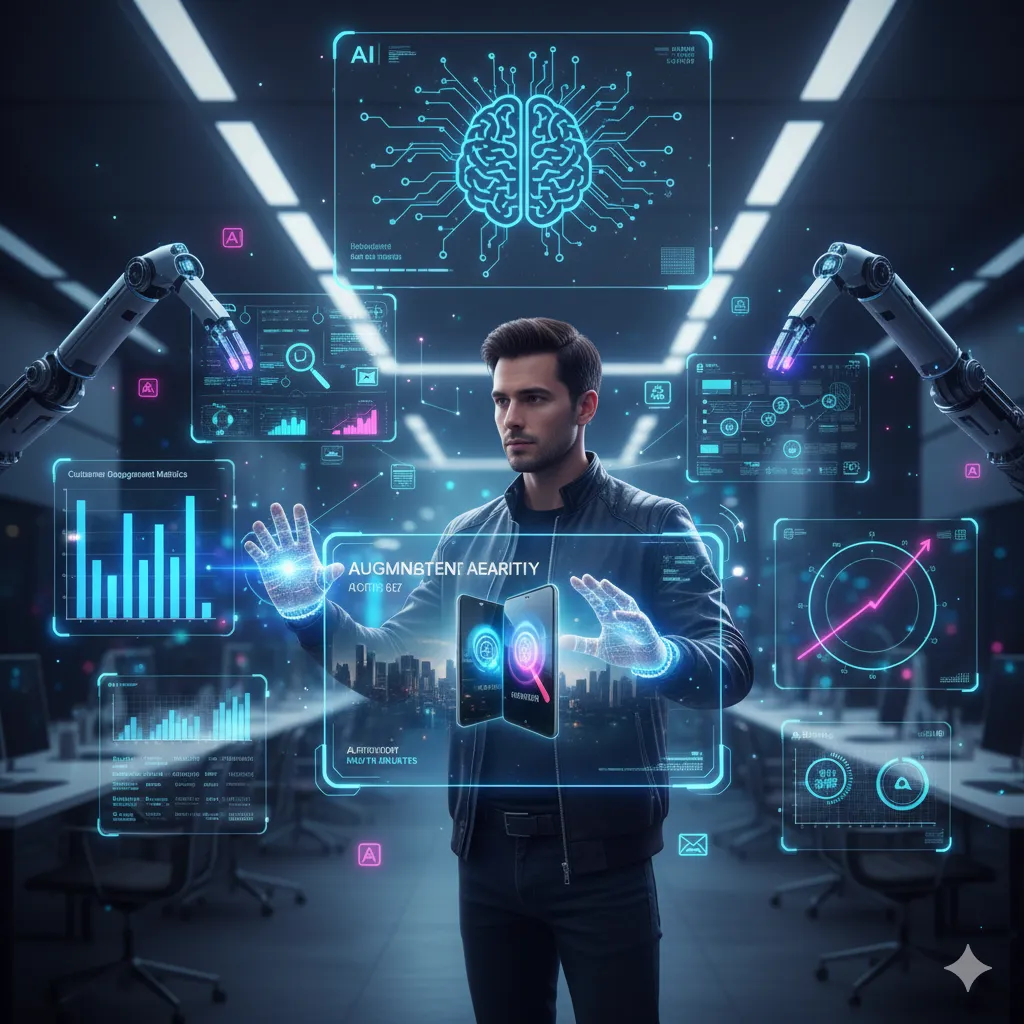
The true potential of modern digital marketing emerges when AI, AR, and automation are integrated. AI analyzes and predicts behavior, AR creates immersive and interactive experiences, and automation delivers these experiences at scale. Together, they enable hyper-personalized, engaging, and efficient marketing campaigns that traditional methods cannot achieve.
For example, an e-commerce brand could use AI to predict which products a customer is likely to purchase, AR to allow them to virtually try those products, and automation to deliver personalized follow-up emails and promotions. This seamless integration creates a cohesive journey, increases engagement, and drives sales while reducing manual workload.
Challenges and Considerations
While the benefits of AI, AR, and automation are significant, businesses must navigate potential challenges. Data privacy remains a top concern. Personalization relies on data, and brands must ensure compliance with regulations such as GDPR and CCPA. Transparency and trust are essential to avoid alienating audiences.
Technical complexity is another consideration. Implementing AI, AR, and automation tools requires expertise and investment. Brands must evaluate platforms carefully, prioritize integration, and ensure that the technology enhances rather than complicates their marketing efforts.
Finally, human creativity and judgment remain indispensable. AI can generate insights, AR can engage visually, and automation can scale campaigns—but strategy, storytelling, and emotional connection still require a human touch. Successful brands balance technological innovation with human creativity.
The Future of Digital Marketing
The convergence of AI, AR, and automation represents the next frontier of digital marketing. Businesses that adopt these technologies strategically will be able to deliver highly personalized, immersive experiences at scale, creating stronger connections with clients and driving measurable results.
As consumers increasingly expect relevant content, instant responses, and interactive experiences, brands cannot afford to rely solely on traditional marketing methods. Embracing AI, AR, and automation is no longer optional—it’s essential for staying competitive in a rapidly evolving digital landscape.
For brands ready to innovate, the opportunities are limitless. AI can provide data-driven insights, AR can transform engagement, and automation can deliver precision at scale. Together, they empower marketers to focus on creativity, strategy, and building authentic relationships with their audience. The next frontier of digital marketing is here, and it’s reshaping how brands connect, engage, and convert in the digital age.