
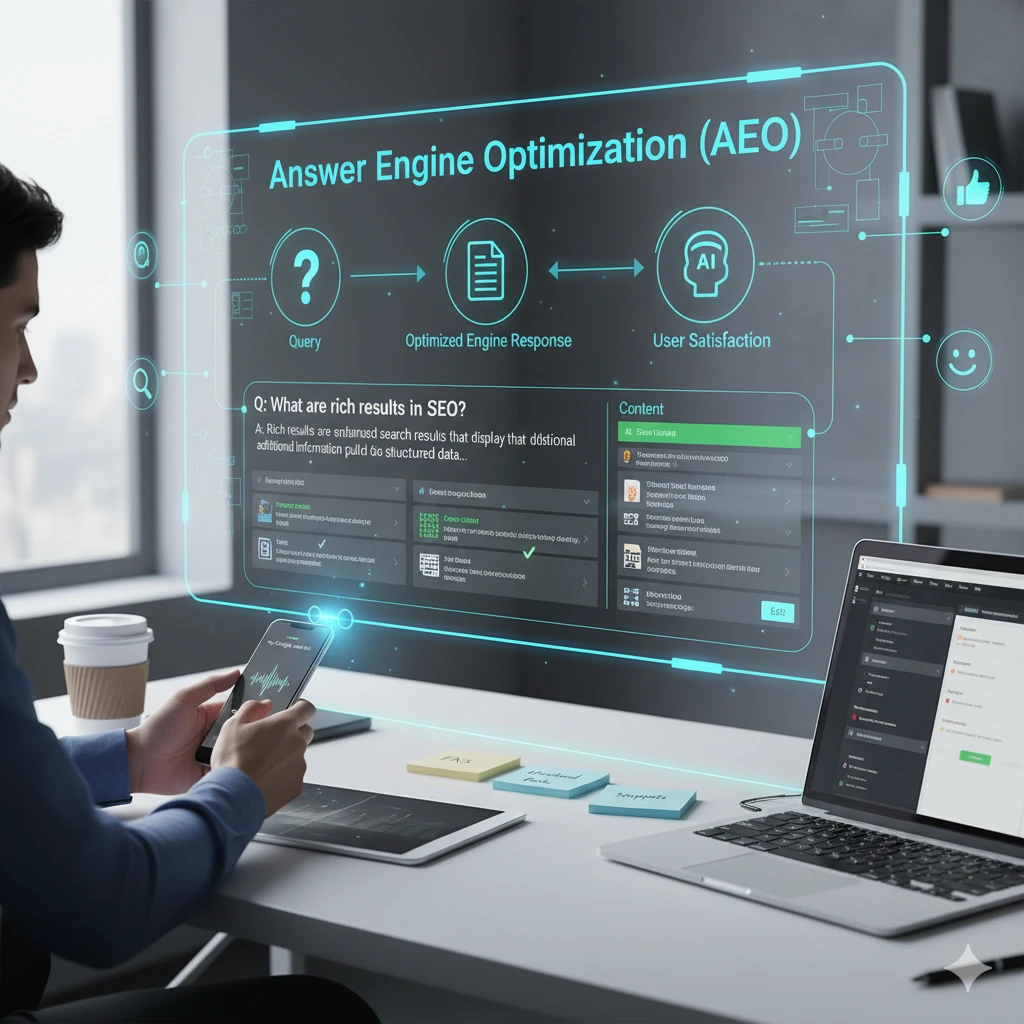
Optimizing for Answer Engines (AEO) Instead of Just Search Engines
Search behavior is evolving rapidly. Users are no longer just typing keywords into search engines and clicking through a list of results. Today, AI assistants and answer engines are providing instant answers directly, often without sending users to a website. This shift has introduced Answer Engine Optimization (AEO)—a new approach that ensures your content is discoverable in this AI-driven landscape.
What is Answer Engine Optimization (AEO)?
Answer Engine Optimization (AEO) is the process of structuring content so AI assistants, voice search, and answer engines can extract and present it directly to users. Unlike traditional SEO, which focuses on ranking pages in search results, AEO focuses on being the answer.
AEO emphasizes:
- Concise and clear content that addresses specific questions.
- Structured data and schema markup to make content machine-readable.
- Conversational language suited for voice and AI queries.
Why AEO Matters
The rise of AI assistants and smart devices has changed how users access information:
- Zero-Click Searches: Many queries are answered directly on the results page, bypassing clicks.
- Voice Search Growth: Smart speakers and virtual assistants prioritize answers, not web links.
- Authority and Visibility: Being featured as a trusted answer increases credibility and brand recognition.
Brands that optimize for AEO can gain visibility even when users don’t visit their website directly, which is crucial in the age of instant answers.
Key Strategies for AEO
1. Use Structured Data
Implement schema markup on your website to make your content easily understandable by AI systems. This helps answer engines identify key elements like products, FAQs, events, or how-to guides.
2. Answer Questions Directly
Create content in a Q&A or FAQ format. Address common questions in short, clear paragraphs or bullet points to increase your chances of being featured in AI responses.
3. Optimize for Conversational Queries
Voice searches and AI assistants often use natural language questions. Include phrases like:
- “How do I…”
- “What is the best way to…”
- “Why does…”
This helps answer engines match queries to your content.
4. Focus on Content Credibility
Ensure your content is accurate, trustworthy, and authoritative. Answer engines favor reliable sources and well-cited information.
5. Monitor and Iterate
Track which pages are being cited in AI answers and optimize them continuously. Use analytics to see engagement, queries, and answer visibility metrics.
Challenges in AEO
While AEO is essential, it comes with challenges:
- Emerging Metrics: Measuring success can be difficult since traditional clicks may decrease.
- Balancing SEO and AEO: Content still needs to rank for search while being optimized for AI answers.
- Content Naturalness: Over-optimization for AI may reduce readability and human engagement.
The Future of AEO
As AI assistants become more integrated into daily life, being the answer will be more important than ever. Brands that adapt to AEO early will secure top visibility in voice and AI-driven search, even in a zero-click environment.
Conclusion
Answer Engine Optimization is the next evolution of digital marketing. By creating structured, clear, and conversational content, brands can ensure they stay visible in the AI-powered search landscape. Optimizing for AEO isn’t just about search—it’s about being the trusted answer your audience seeks.
Pingback: Generative Engine Optimization (GEO) and The Zero-Click Future -