SEO or Social Media — Who Wins the ROI Game in 2026?
The digital marketing world in 2026 is more competitive and data-driven than ever. Businesses are constantly evaluating where to invest their marketing budgets for the highest return on investment (ROI). Two of the biggest contenders in this ongoing debate are Search Engine Optimization (SEO) and Social Media Marketing (SMM). Both play crucial roles in building online visibility, generating leads, and driving revenue. But as marketing evolves with AI, automation, and changing user behavior, the question remains: which delivers better ROI in 2026?
Understanding the 2026 Marketing Landscape
Consumer behavior in 2026 is driven by personalization, authenticity, and convenience. Users want relevant content quickly, whether it’s through Google searches, TikTok videos, or Instagram Reels. Artificial Intelligence now powers much of online discovery — from AI-driven SEO algorithms that understand intent to social media platforms that personalize feeds using predictive analytics. This convergence makes the SEO vs Social Media debate even more interesting because both strategies now overlap more than ever.
The Case for SEO: Long-Term Visibility and Trust
SEO continues to be one of the most sustainable and cost-effective marketing channels in 2026. Organic search drives consistent traffic, builds credibility, and strengthens brand authority. With Google’s AI-powered ranking systems like Search Generative Experience (SGE) and RankBrain, SEO has shifted from keyword stuffing to intent-driven content optimization.
1. AI-Powered Search Optimization
In 2026, SEO is not just about ranking on Google; it’s about being discoverable across multiple platforms — from voice assistants to AI answer engines like ChatGPT Search and Gemini. Optimizing for semantic search, featured snippets, and conversational queries ensures your content appears in relevant AI-generated answers.
2. High ROI Through Evergreen Content
Unlike paid ads, SEO builds long-term equity. A single optimized blog post or landing page can generate traffic for years. Businesses that invest in high-quality content, link-building, and technical SEO see compounding returns over time. While SEO requires patience, it delivers one of the highest ROI percentages in digital marketing — especially for B2B and e-commerce sectors.
3. Credibility and User Trust
Organic search results carry a sense of authenticity that paid promotions often lack. In 2026, users still trust Google’s top organic results more than sponsored posts. A strong SEO presence signals expertise, authority, and trustworthiness — essential factors for conversion and retention.
The Case for Social Media: Instant Engagement and Virality
While SEO wins in sustainability, social media dominates when it comes to instant visibility and emotional connection. In 2026, social media algorithms powered by AI have made it easier than ever for brands to reach highly targeted audiences and create viral moments. Platforms like Instagram, TikTok, YouTube Shorts, and LinkedIn are no longer just for branding — they are full-fledged conversion channels.
1. Short-Form Video and Real-Time Engagement
Short-form content continues to reign supreme. Video-based storytelling remains the most engaging medium, driving high click-through and retention rates. Features like live shopping, interactive polls, and AR filters make engagement immediate and measurable. Social media allows brands to humanize their message and connect emotionally with audiences — something SEO struggles to do directly.
2. Influencer and Community Marketing
By 2026, micro and nano influencers dominate social platforms. Brands collaborate with smaller creators who have loyal, niche communities. This authenticity drives measurable ROI through higher conversion rates compared to traditional ads. Social commerce integrations allow users to purchase directly from posts, eliminating friction in the customer journey.
3. Data-Driven Ad Targeting
Paid social media campaigns have become smarter and more personalized. With AI-powered insights, brands can predict user behavior, retarget effectively, and deliver content that resonates. This real-time adaptability ensures faster results and higher engagement metrics, though it often requires consistent investment.
Comparing ROI: SEO vs Social Media in 2026
Cost Efficiency
SEO is more cost-effective over time. The initial investment in content creation, optimization, and backlinks pays off for years. Social media, while faster, requires ongoing spending on ads, influencer partnerships, and content production to maintain momentum.
Lead Quality
SEO tends to attract users with high intent — people actively searching for solutions. This leads to stronger conversion rates. Social media, on the other hand, is ideal for top-of-funnel awareness and engagement but can struggle with lead quality unless paired with retargeting strategies.
Speed of Results
Social media wins in terms of speed. A viral post or ad can deliver instant visibility and sales. SEO takes time to build, but its results are stable and compounding.
Longevity
SEO clearly dominates in longevity. Once your pages rank, they can continue to bring organic traffic for years without constant reinvestment. Social media content, however, has a short lifespan and requires frequent updates to stay relevant.
Trust and Brand Authority
SEO wins here too. Organic rankings signal credibility, while social media focuses on relatability. In 2026, users trust brands that appear consistently in search results as industry authorities, especially for high-value purchases or B2B services.
The Winning Strategy: Integration Over Competition
In 2026, it’s not about choosing between SEO or Social Media — it’s about integration. The best-performing brands use both channels synergistically. SEO fuels discoverability and long-term growth, while social media drives awareness, community, and engagement. For example, SEO-optimized blog content can be repurposed into short videos for Instagram or LinkedIn, boosting visibility across both ecosystems.
AI and Omnichannel Marketing
AI tools now allow seamless integration between SEO and social media. Predictive analytics identify which topics perform well on search and social platforms simultaneously. Omnichannel automation ensures consistent messaging and data synchronization across both. Brands that unify their strategies under AI-driven analytics see the highest ROI and stronger audience retention.
Conclusion: The ROI Champion in 2026
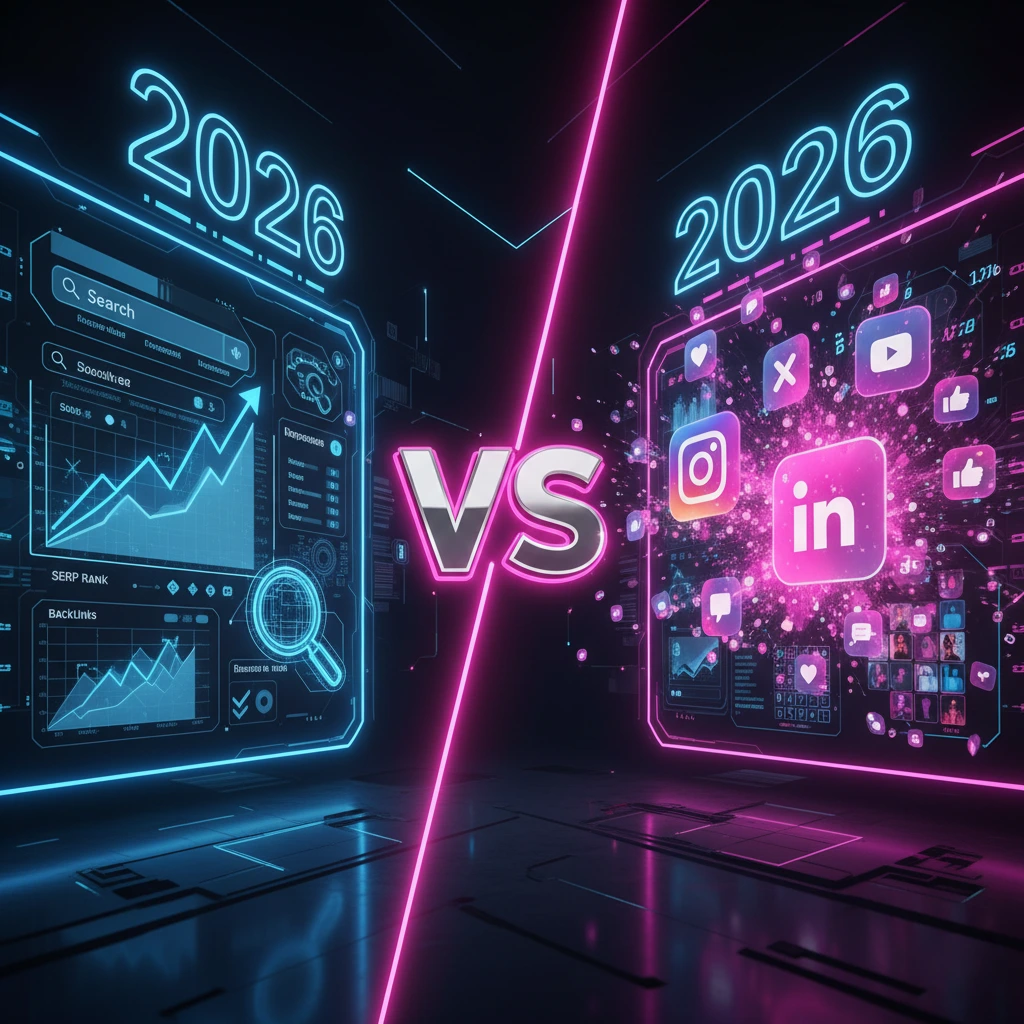
So, who wins the ROI game in 2026 — SEO or Social Media? The answer depends on your goals. If you’re focused on long-term organic growth, credibility, and cost efficiency, SEO is the clear winner. But if your goal is instant visibility, engagement, and viral reach, social media offers unbeatable short-term ROI.
Ultimately, the smartest marketers in 2026 don’t treat SEO and social media as competitors but as partners. Combining the trust of organic search with the power of social storytelling creates a marketing engine that drives consistent traffic, engagement, and sales. The brands that master this balance will be the true ROI winners of the digital age.