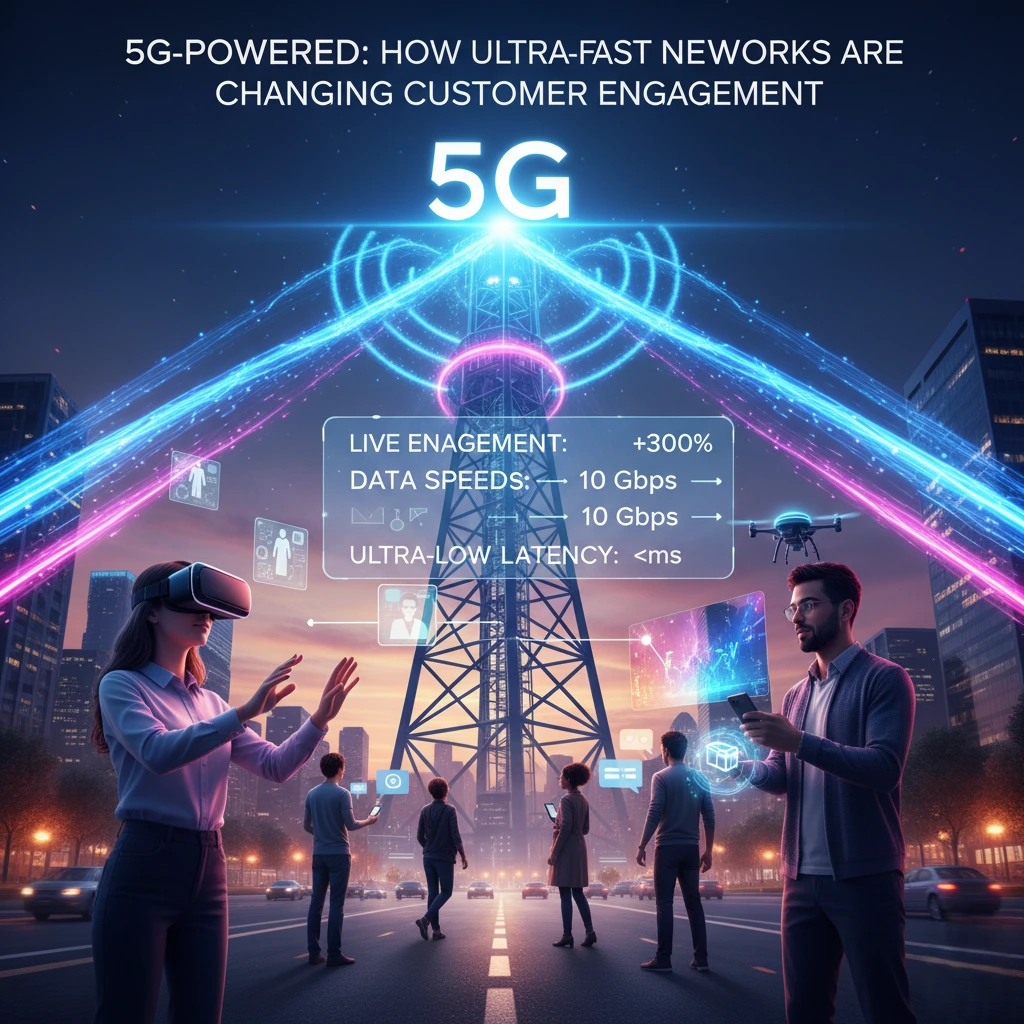
5G-Powered: How Ultra-Fast Networks Are Changing Customer Engagement
The world of digital marketing and customer experience is evolving faster than ever, and one of the biggest drivers of this transformation is 5G technology. As ultra-fast networks roll out across the globe, businesses are discovering new and more interactive ways to connect with their audiences. With 5G-powered marketing, brands can deliver richer, more personalized, and instantaneous experiences that were impossible just a few years ago. This next-generation network is not just about speed—it’s about redefining how consumers engage, interact, and build relationships with brands in real time.
Understanding 5G and Its Game-Changing Power
5G, short for the fifth generation of mobile networks, is not merely an upgrade to 4G. It represents a complete technological leap forward. With data transfer speeds up to 100 times faster than 4G, ultra-low latency, and the capacity to connect billions of devices simultaneously, 5G is paving the way for an interconnected digital ecosystem.
This massive boost in speed and reliability means users can stream high-definition video, engage in real-time AR and VR experiences, and access data-heavy content instantly. For marketers, this translates into unprecedented opportunities for immersive customer engagement, instant personalization, and real-time analytics.
The Shift from Passive Consumption to Interactive Engagement
In the 4G era, customers were largely passive content consumers. They watched videos, browsed social feeds, and clicked ads—but interactions were mostly one-way. With 5G, the customer journey becomes more interactive, immersive, and dynamic.
Ultra-fast connectivity allows for seamless live experiences, interactive storytelling, and two-way engagement between brands and consumers. Whether it’s a live-stream shopping event in 8K resolution, an augmented reality (AR) product try-on, or a real-time customer service video chat, 5G enables it all without lag or disruption.
For brands that prioritize customer experience (CX), this level of engagement builds stronger emotional connections and deeper loyalty—something every marketer strives for in a crowded digital space.
How 5G Is Transforming Customer Engagement
1. Immersive AR and VR Experiences
5G technology is fueling the explosion of augmented reality (AR) and virtual reality (VR) marketing. These technologies have existed for years, but network limitations often caused latency, lag, or poor-quality visuals. With 5G, those problems disappear.
Now, consumers can enjoy smooth, ultra-realistic AR experiences—like virtually trying on clothing, testing out furniture in their homes, or even walking through a digital car showroom. Retail giants like IKEA and Nike are already experimenting with 5G-powered AR shopping, enabling customers to engage with products in entirely new ways.
This level of immersion not only boosts customer satisfaction but also increases purchase confidence and reduces return rates—an enormous win for eCommerce businesses.
2. Real-Time Personalization
Modern customers expect brands to understand them instantly, anticipate their needs, and deliver relevant content without delay. With 5G’s ultra-low latency, real-time personalization becomes seamless.
Imagine walking near a retail store, and your smartphone instantly receives a personalized offer based on your browsing history, past purchases, and current location. Or streaming a video ad that changes dynamically depending on your behavior at that very moment.
By integrating AI-driven analytics and 5G connectivity, brands can offer hyper-personalized marketing experiences that are both timely and context-aware, leading to higher engagement and conversion rates.
3. Next-Level Video Marketing
Video content continues to dominate the digital landscape, and 5G is taking it to the next level. The ability to stream 4K and 8K videos without buffering opens up creative possibilities for marketers.
Brands can host live, interactive product demos, real-time webinars, and influencer-led campaigns that engage audiences across devices with zero interruptions. Consumers can even participate in live polls, Q&A sessions, or virtual events without delay.
According to industry reports, video marketing ROI is expected to surge as 5G becomes more mainstream because smoother streaming equals higher viewer retention and engagement.
4. Enhanced Mobile Commerce (mCommerce)
Mobile commerce already dominates digital retail, but 5G will push it to new heights. With faster network speeds, customers can browse, shop, and complete transactions instantly, even in crowded areas or on public transportation.
5G also improves voice-assisted shopping and AI chatbots, enabling faster responses and smarter product recommendations. Imagine a future where customers can interact with brand assistants in real-time video calls, get instant support, or even see live 3D previews of products before purchasing—all powered by 5G.
5. Smart Cities and IoT-Driven Engagement
The Internet of Things (IoT) thrives on 5G’s ability to connect millions of devices seamlessly. This interconnected ecosystem allows brands to create contextual marketing experiences across smart devices.
For example, a smart refrigerator might suggest recipes and offer digital coupons for missing ingredients. A connected car could recommend nearby coffee shops or gas stations based on user preferences. These interactions will redefine customer engagement by blending digital marketing into everyday life.
The result is a world where marketing is no longer intrusive—it’s intuitive and personalized, powered by real-time data exchange between devices.
5G and the Rise of Experiential Marketing
As attention spans shrink, brands are shifting from traditional advertising to experiential marketing—where customers actively participate in brand experiences rather than just observing them.
5G amplifies this trend by supporting interactive live events, virtual brand activations, and multi-sensory storytelling. Imagine attending a hybrid concert where fans across the world can join via VR, interact with artists in real time, and make instant in-app purchases—all without buffering or delay.
This kind of immersive engagement was unimaginable before 5G. It turns passive viewers into active participants and brand advocates.
The Role of 5G in Real-Time Analytics
For marketers, data is the foundation of every strategy. 5G’s high-speed connectivity enables instant data collection and processing, allowing brands to analyze customer behavior in real time.
Marketers can monitor campaign performance, social sentiment, and engagement metrics as they happen, adjusting strategies on the fly. This real-time insight helps improve targeting, optimize ad spend, and deliver content that resonates more effectively.
In industries like retail, hospitality, and entertainment, where trends shift rapidly, this agility gives brands a competitive edge.
Challenges and Considerations
While the opportunities of 5G are vast, challenges remain. The rollout is still uneven globally, and integrating new technologies like AR, VR, and IoT requires significant investment. Brands also need to prioritize data security and privacy, ensuring that personalization does not come at the expense of user trust.
Additionally, marketers must rethink their creative strategies. Ultra-fast networks demand high-quality, interactive content, and not all teams are equipped to produce experiences that take full advantage of 5G capabilities.
The Future of 5G-Powered Customer Engagement
As 5G adoption accelerates, the line between digital and physical interactions will blur. Customer engagement will become more instantaneous, immersive, and data-driven than ever before.
From smart wearables to AI-driven personalization and virtual brand worlds, the next generation of marketing will be powered by real-time connectivity and limitless creativity. Brands that embrace 5G early will lead the way in shaping a new era of customer experience—one where engagement is not just faster but smarter and more human.
Conclusion
5G is more than a technological upgrade—it’s a marketing revolution. It empowers brands to create deeper, faster, and more meaningful interactions with customers. By combining ultra-fast networks, AI analytics, and immersive technologies, 5G transforms how businesses engage, communicate, and build loyalty.
As the digital landscape becomes increasingly connected, one thing is clear: the future of customer engagement is 5G-powered.