
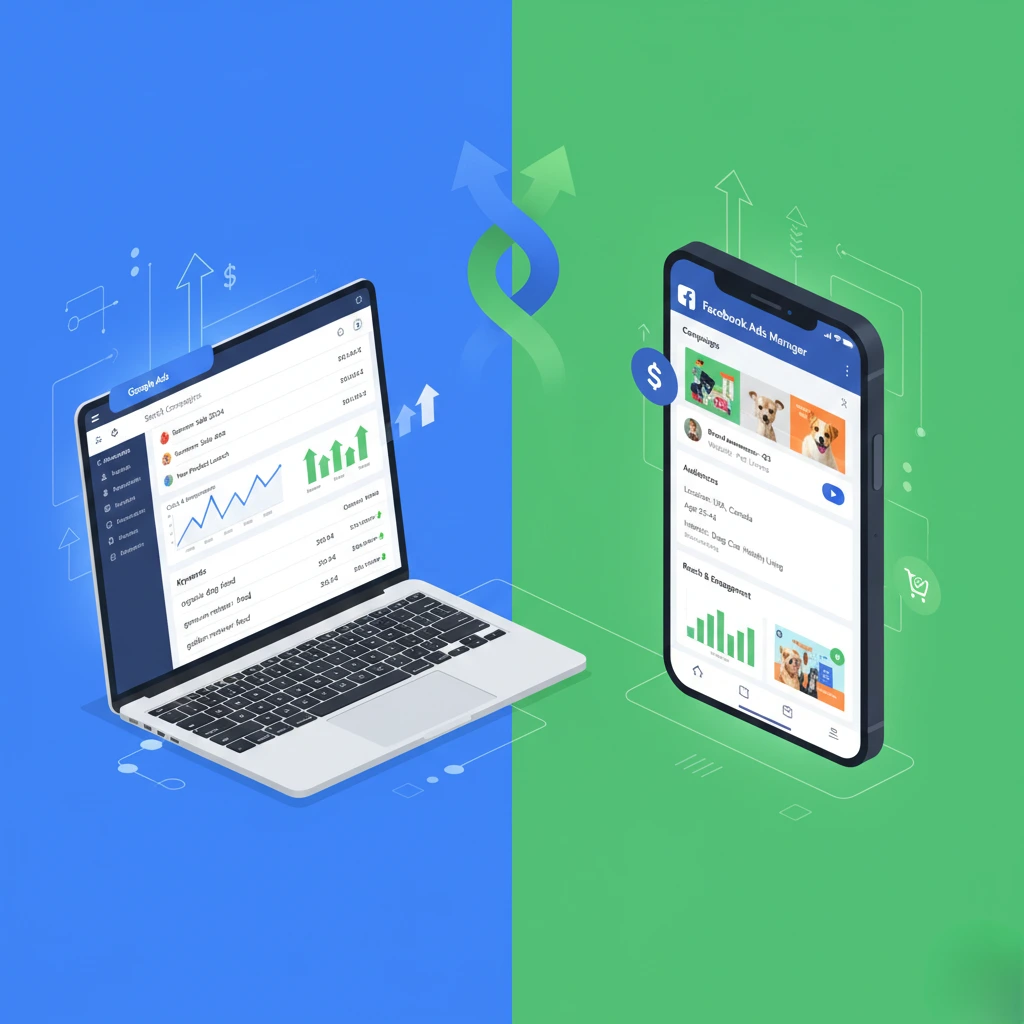
Google Ads vs Facebook Ads: Which Is Better for Your Business?
When it comes to online marketing, one of the most common questions businesses ask is: Google Ads vs Facebook Ads — which platform delivers better results? Both platforms dominate the digital advertising space, but they work in very different ways. Choosing the right one depends on your business goals, audience, and budget.
In this guide, we’ll break down the differences between Google Ads vs Facebook Ads, explore their strengths, and help you determine which option is best for your marketing strategy.
Understanding the Core Difference
The biggest difference between Google Ads vs Facebook Ads lies in user intent.
Google Ads focuses on search intent. Users actively search for products or services using keywords. This makes it a powerful form of PPC advertising because you’re targeting people who are already looking for what you offer.
Facebook Ads, on the other hand, interrupts users while they browse social media. These paid social media ads are shown based on demographics, interests, and behaviors rather than active searches. This makes Facebook ideal for building awareness and generating demand.
So when comparing Google Ads vs Facebook Ads, it really comes down to intent versus discovery.
Targeting Capabilities
Both platforms offer advanced targeting, but they approach it differently.
Google Ads targets users based on search queries, location, device type, and browsing behavior across its display network. With PPC advertising, you can bid on high-intent keywords and show your ads at the exact moment someone searches for a related term.
Facebook Ads excels at audience targeting. You can target users based on age, interests, job titles, life events, purchase behavior, and even create lookalike audiences. This level of detail makes paid social media ads extremely powerful for niche targeting.
In the debate of Google Ads vs Facebook Ads, Facebook often wins in granular audience segmentation, while Google dominates in intent-driven targeting.
Cost and Budget Considerations
Cost is another important factor when evaluating Google Ads vs Facebook Ads. Both platforms operate on auction-based systems, meaning costs vary depending on competition and industry.
Google Ads often has higher cost-per-click rates, especially in competitive industries like legal services, finance, and insurance. However, because users are actively searching, the conversion rates can be higher.
Facebook Ads generally offer lower cost-per-click and cost-per-impression rates. But since users are not actively searching, conversion rates may vary depending on how compelling your offer is.
When planning your PPC advertising budget, it’s important to test and optimize rather than assume one platform is always cheaper.
Ad Formats and Creativity
Ad format flexibility also differs significantly.
Google Ads primarily focuses on text-based search ads, though it also offers display ads, YouTube video ads, and shopping ads. The creative element is often more limited in search campaigns because the emphasis is on keywords and relevance.
Facebook Ads are highly visual. You can use images, videos, carousels, stories, reels, and more. Paid social media ads allow for creative storytelling, emotional engagement, and brand personality expression.
If your brand relies heavily on visuals and storytelling, Facebook may offer more creative opportunities. However, if your goal is to capture demand quickly, Google’s search ads may be more effective.
Conversion Goals and Funnel Stage
Another key difference in Google Ads vs Facebook Ads is where they perform best in the sales funnel.
Google Ads works exceptionally well for bottom-of-funnel leads. When someone searches “best accounting software for small business,” they are close to making a purchase decision. PPC advertising on Google captures that high-intent traffic.
Facebook Ads perform well at the top and middle of the funnel. You can introduce your brand to new audiences, build trust, and retarget visitors who previously engaged with your content.
Many successful marketers don’t choose between Google Ads vs Facebook Ads — they use both strategically. Facebook builds awareness and interest, while Google captures demand when prospects are ready to buy.
Analytics and Optimization
Both platforms provide strong analytics tools.
Google Ads integrates seamlessly with analytics platforms, allowing you to track keyword performance, conversion rates, and return on ad spend in detail. Optimization often revolves around refining keyword lists and improving landing pages.
Facebook Ads Manager provides detailed audience insights, engagement metrics, and conversion tracking. With paid social media ads, creative testing plays a major role in improving performance.
The key to success in either platform is continuous testing and optimization. No campaign should remain static.
Which Platform Is Better?
So, Google Ads vs Facebook Ads — which is better?
The answer depends on your objectives:
- If you want immediate leads from people actively searching for your service, Google Ads may be the better choice.
- If you want to build brand awareness, nurture prospects, and create demand, Facebook Ads can be highly effective.
- If your budget allows, combining both platforms often produces the strongest results.
Ultimately, the best strategy isn’t about choosing one over the other. It’s about understanding how each platform fits into your overall marketing funnel. By aligning your goals with the strengths of each system, you can create a balanced approach that maximizes ROI.
When evaluating Google Ads vs Facebook Ads, remember that success comes from strategy, testing, and continuous improvement — not simply picking one platform and hoping for the best.