
Retargeting Strategies That Actually Convert
In digital marketing, attracting visitors to your website is only half the battle. Many users browse products or services without completing a purchase, leaving potential revenue untapped. This is where retargeting strategies come into play. Retargeting allows marketers to re-engage visitors who have already shown interest, boosting conversion rates and maximizing ROI.
In this blog, we’ll explore proven retargeting strategies, how to implement them using tools like Google Ads remarketing, and ways to optimize dynamic retargeting campaigns for maximum results.
Understanding Retargeting
Retargeting is a digital advertising technique that targets users who have previously interacted with your website, app, or content. By showing personalized ads to these audiences, businesses can guide them back through the conversion funnel.
Unlike standard advertising, which targets cold audiences, retargeting focuses on users already familiar with your brand, increasing the likelihood of conversions. This makes retargeting strategies an essential component of modern online marketing.
Benefits of Retargeting
- Higher conversion rates: Users exposed to multiple touchpoints are more likely to complete purchases.
- Improved ROI: Ads target warm leads, reducing wasted ad spend.
- Brand recall: Continuous exposure strengthens brand awareness.
- Personalization opportunities: Tailored messaging increases engagement and relevance.
Key Retargeting Strategies
1. Segment Your Audience
One of the most effective retargeting strategies is audience segmentation. Not all visitors behave the same way—some browse product pages, while others abandon their carts. Segmenting users based on behavior allows you to tailor ads to their intent, increasing the chance of conversion.
For example, cart abandoners can receive discount offers, while visitors who browsed product pages might see ads highlighting product benefits or testimonials.
2. Use Google Ads Remarketing
Google Ads remarketing is a powerful tool for implementing retargeting strategies. By placing a remarketing tag on your website, you can create audience lists for people who have visited specific pages or performed certain actions.
Through Google Ads, you can serve personalized ads across the Display Network, YouTube, and Gmail. The platform also allows A/B testing, bid adjustments, and performance tracking, making it easier to optimize campaigns and maximize ROI.
3. Leverage Dynamic Retargeting Campaigns
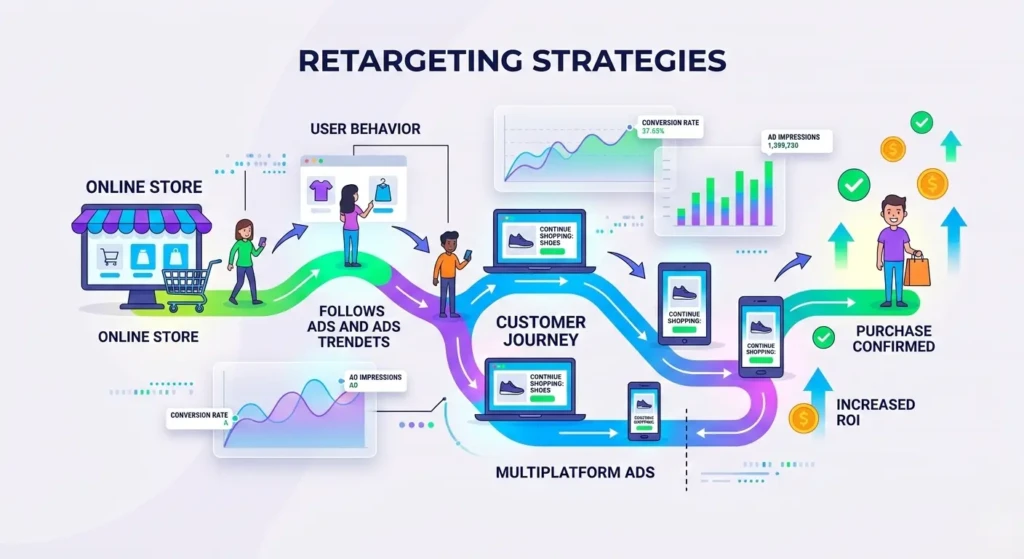
Dynamic retargeting campaigns take personalization to the next level. They automatically display ads featuring products or services that users have viewed on your website. For e-commerce businesses, this is a game-changer.
For instance, if a user viewed a specific pair of shoes but didn’t purchase, dynamic retargeting ads can display that exact pair with special offers, reminding users of their interest and prompting action.
4. Optimize Ad Frequency
While retargeting is effective, showing ads too often can annoy users. One of the key retargeting strategies is to set frequency caps. This ensures your audience sees your ads enough to stay top-of-mind without causing fatigue.
Adjust frequency based on campaign goals—awareness campaigns may allow more impressions, while direct conversion campaigns require a more balanced approach.
5. Use Multi-Channel Retargeting
Don’t limit retargeting to one platform. Combining display ads, social media retargeting, and email can create a seamless user experience across channels. Multi-channel retargeting ensures your message reaches users wherever they spend their time online, increasing engagement and conversions.
6. Time-Based Retargeting
Another effective approach is time-based retargeting. Show different ads depending on how long it’s been since a visitor interacted with your website. Users who recently abandoned a cart might respond to immediate discounts, while those who visited weeks ago may need brand-focused messaging to rekindle interest.
7. Test and Optimize
Finally, consistent testing and optimization are crucial for all retargeting strategies. Experiment with ad creatives, messaging, call-to-actions, and targeting parameters. Monitor performance metrics like click-through rates (CTR), conversion rates, and cost per acquisition (CPA) to refine campaigns over time.
Measuring Success
To evaluate the effectiveness of retargeting strategies, track KPIs such as:
- Conversions generated from retargeted ads
- Click-through rates (CTR)
- Return on ad spend (ROAS)
- Engagement metrics like video views or ad interactions
Using these metrics, marketers can fine-tune dynamic retargeting campaigns and Google Ads remarketing settings to maximize results.
Final Thoughts
Retargeting is no longer optional for businesses aiming to optimize digital marketing efforts. By implementing well-planned retargeting strategies, brands can re-engage potential customers, improve online advertising performance, and increase overall ROI.
From audience segmentation and Google Ads remarketing to dynamic retargeting campaigns and multi-channel approaches, there are numerous tactics to re-engage users effectively. Consistent testing, personalization, and optimization ensure your retargeting campaigns not only capture attention but also drive meaningful conversions.
With these strategies, businesses can turn lost visitors into loyal customers, making retargeting a critical part of any marketing plan.