

Why AI Isn’t Just a Tool – It’s the Marketing Partner You Didn’t Know You Needed
Marketing has always been about understanding people—what they want, what they value, and how they make decisions. But in an era where data is endless, attention is scarce, and customer journeys stretch across countless touchpoints, even the best marketers can’t keep up alone. Enter artificial intelligence (AI). For years, AI has been described as a “tool” to make marketing easier, faster, or more efficient. Yet that definition undersells its true potential. AI is no longer just a tool in the marketer’s toolbox—it’s a strategic partner that can think, learn, and collaborate in ways that transform how marketing works.
The Shift From Tool to Partner
Traditionally, tools are designed to help humans do their jobs better. You tell them what to do, and they execute. But AI operates differently. It doesn’t just follow commands—it learns from data, adapts to new patterns, and even suggests smarter ways to reach goals. That’s what makes AI more of a collaborator than a simple assistant.
Imagine a partner that analyzes millions of data points in seconds, predicts customer behavior, personalizes content for every individual, and even helps you refine your brand voice. That’s what today’s AI-driven systems are doing. They’re not replacing marketers; they’re amplifying their creativity, extending their reach, and sharpening their instincts with data-backed precision.
In fact, the best marketers are realizing that AI isn’t something to control—it’s something to collaborate with. Just as a human partner brings unique insights and skills to a relationship, AI brings speed, scale, and analytical power that no human could match alone.
How AI Enhances Every Stage of the Marketing Journey
Marketing used to be linear: create a campaign, launch it, measure results, repeat. Today, it’s dynamic, always-on, and data-fueled. AI integrates into every step, from strategy to execution to optimization, acting as a partner in decision-making.
1. Research and Strategy
Before AI, market research involved weeks of collecting surveys, analyzing demographics, and guessing trends. Now, AI can scan billions of online interactions, social posts, and behavioral signals to uncover what your audience truly cares about—instantly. It can identify rising topics, shifting sentiments, and even cultural trends before they go mainstream.
This means strategy is no longer built on assumptions but on real-time insights. For marketers, AI becomes a partner in vision-setting—helping define who to reach, how to reach them, and what to say.
2. Creative Development
Creativity was once considered a purely human domain, but AI is proving to be a surprisingly powerful creative partner. Tools like ChatGPT, DALL·E, and other generative AI systems can brainstorm ideas, draft headlines, design visuals, and even create personalized ads at scale.
This doesn’t mean humans are out of the picture—it means they can focus on higher-level thinking. Instead of spending hours writing copy variations, marketers can collaborate with AI to generate ideas quickly, then fine-tune them with human intuition and emotion.
AI enhances creativity by removing the blank page problem, allowing marketers to explore dozens of concepts before settling on the perfect one. It’s like having a creative partner who never sleeps, never runs out of ideas, and constantly learns your style.
3. Personalization and Engagement
One of the biggest challenges in marketing has always been personalization. How do you make every customer feel seen and valued without manually crafting messages for thousands—or millions—of people? AI has cracked that code.
By analyzing user behavior, purchase history, and interaction data, AI can create hyper-personalized experiences in real time. It can send the right message to the right person at the perfect moment. Whether it’s an email subject line, a product recommendation, or a social media post, AI fine-tunes engagement for maximum impact.
This level of personalization builds stronger relationships. Customers feel understood, not targeted. That’s the kind of emotional connection every brand strives for—and AI helps make it scalable.
4. Optimization and Performance
Once campaigns are live, AI doesn’t stop working. It continuously analyzes performance data to identify what’s working and what’s not—then adapts automatically.
From A/B testing ad creatives to adjusting bids in real time, AI ensures every marketing dollar is optimized for maximum ROI. Unlike human teams, it doesn’t need breaks or meetings to analyze data. It just learns and evolves.
This is where AI truly becomes a performance partner—proactively improving outcomes while freeing marketers to focus on strategy, storytelling, and brand growth.
The Emotional Side of AI Collaboration
Many marketers worry that AI will make their work feel less human. But in practice, it’s often the opposite. By automating repetitive tasks and data-heavy analysis, AI gives marketers more time to focus on emotional connection, storytelling, and brand authenticity.
Think of AI as a silent collaborator—handling the mechanics so you can focus on the magic. It can analyze sentiment to gauge how audiences feel about your brand, detect tone in customer feedback, and even suggest language that resonates emotionally. That blend of machine precision and human empathy is what modern marketing is built on.
Breaking Down Barriers Between Teams
AI doesn’t just empower individual marketers—it unites entire organizations. Marketing teams can collaborate with sales, product, and customer service through shared AI insights. Everyone operates from the same data-driven truth, breaking down silos that often hold businesses back.
For example, AI can reveal how marketing campaigns influence sales calls or how product feedback shapes brand perception. When AI acts as a cross-functional partner, it ensures every department contributes to the same overarching narrative—creating a seamless, customer-first experience.
The Future: AI as a Strategic Partner in Brand Growth
The next evolution of marketing isn’t about automation; it’s about augmentation. Brands that treat AI as a co-strategist, not just a tool, will have a massive advantage.
Soon, AI won’t just predict consumer behavior—it will anticipate cultural shifts, guide creative direction, and help shape the very identity of brands. Marketers who embrace this partnership will move faster, think smarter, and connect deeper than ever before.
How to Start Building Your AI Partnership
You don’t need to overhaul your entire strategy to start working with AI. The key is to approach it like any valuable partner—learn its strengths, communicate clearly, and set shared goals.
Start small:
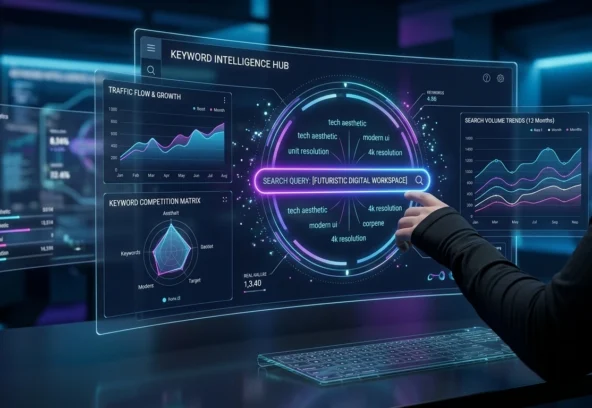
- Use AI tools for content ideation or keyword research.
- Experiment with personalization in your email or ad campaigns.
- Analyze campaign data using AI-driven dashboards.
The more you collaborate, the better AI understands your brand’s voice, audience, and ambitions.
Conclusion: The Partner You Didn’t Know You Needed
AI isn’t replacing marketers—it’s empowering them. It’s the teammate who works 24/7, the analyst who never misses a pattern, and the creative collaborator who always has another idea. By embracing AI as a partner rather than a tool, marketers unlock a new era of innovation—one where strategy meets empathy, data meets storytelling, and technology meets human imagination.
In the end, marketing has always been about connection. And with AI by your side, that connection just became more intelligent, more meaningful, and more human than ever before.