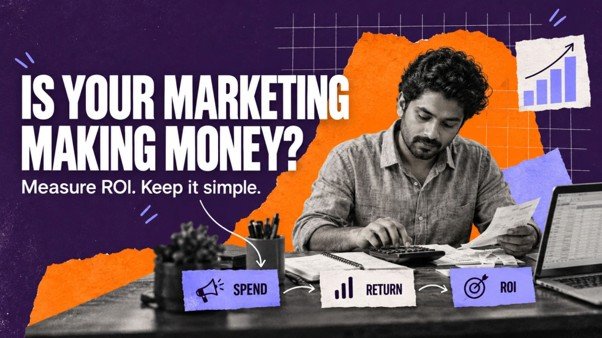
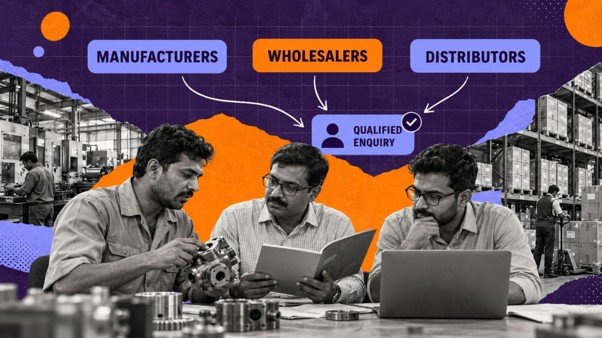
For decades, many Indian manufacturers and wholesalers grew through the same channels: trade fairs, dealer networks, sales representatives and personal relationships. These channels still matter, but buyer behaviour has changed. Procurement managers, retailers and business owners now search online, compare suppliers on marketplaces, check reviews and request quotes digitally before they ever pick up the phone.
Businesses that are invisible online lose opportunities to competitors who show up with complete catalogues, quick responses and credible profiles. The good news is that B2B lead generation does not require huge budgets. It requires a structured approach to visibility, trust, distribution and follow-up.
This guide shows manufacturers, wholesalers and distributors how to generate consistent B2B leads in India.
How B2B Buying Differs From Consumer Buying
• Higher order values mean buyers research more carefully
• Multiple decision-makers may be involved
• Longer sales cycles with quotes, samples and negotiations
• Repeat purchases make long-term relationships valuable
• Specifications matter: materials, certifications, capacity and minimum order quantities
• Reliability is critical: delivery timelines, quality consistency and after-sales support
Your marketing must address these realities with detailed information, credibility and responsiveness.
Step 1: Build Your Digital Visibility
Google Business Profile
Even B2B buyers search on Google and Maps for suppliers near them. A complete profile with categories, products, photos of your facility and reviews from business clients builds visibility and trust.
A Clear Website or Catalogue
Buyers need a place to see your product range, specifications, certifications and contact details. A simple, well-organised website or digital catalogue works better than a flashy site with little information.
SEO for Product and Category Terms
Optimise pages for searches buyers use, such as “[product] manufacturer in [city]” or “[product] wholesale supplier India.”
Step 2: Use B2B Marketplaces for Distribution
B2B marketplaces gather buyers who are actively sourcing products. A strong marketplace presence can generate enquiries from regions and buyer types you never reached through dealers.
Listing best practices: – Choose precise product categories – Upload clear product photos and facility images – Include specifications, MOQ, pricing ranges and delivery capabilities – Highlight certifications and quality standards – Collect reviews from satisfied buyers – Respond to enquiries quickly with clear quotes
The vCuestore marketplace, part of the vCuestore Growth Ecosystem, provides a one-year listing with category visibility for participating businesses. Learn more in our guide to marketplace listing benefits.
Step 3: Build Trust With Proof
B2B buyers want evidence that you can deliver reliably:
• Certifications: ISO, BIS, FSSAI or industry-specific approvals where applicable
• Facility photos and videos: production lines, warehouses, quality checks
• Client logos and case studies (with permission)
• Reviews and testimonials from business clients
• Years in business and capacity details
• Clear policies on samples, payment terms, delivery and returns
Our guide to online reputation management explains how to build and manage reviews.
Step 4: Leverage LinkedIn for Relationship Building
LinkedIn is where many procurement managers, business owners and decision-makers spend professional time.
• Optimise your company page and founders’ profiles
• Share updates on new products, capacity expansions and quality practices
• Post short case studies and industry insights
• Connect with buyers, retailers and distributors in your target segments
• Send personalised messages offering samples or catalogues
Step 5: Create Useful Content for Buyers
Content helps buyers understand your products and trust your expertise:
• Product guides and comparison sheets
• Application guides showing how products are used
• FAQs about specifications, MOQs and customisation
• Videos of manufacturing processes
• Industry updates relevant to your buyers
Content also supports SEO and gives sales teams materials to share.
Step 6: Use Targeted Advertising Selectively
Paid campaigns can accelerate B2B lead generation when used strategically: – Google Search Ads for high-intent supplier searches – LinkedIn Ads to reach specific industries and job roles – Retargeting ads for website visitors who viewed products
Start small, track cost per qualified lead and scale what works. See performance-based marketing.
Step 7: Build a Strong Enquiry Handling Process
B2B leads are valuable, so losing them to slow responses is costly.
• Respond to enquiries within hours, ideally faster
• Ask qualifying questions: quantity, specifications, timelines, delivery location
• Send clear, professional quotations promptly
• Follow up on quotes that receive no response
• Use a CRM or simple spreadsheet to track every lead’s status
Read our guide to lead follow-up and converting enquiries.
Step 8: Nurture Long-Term Relationships
Repeat orders often provide most B2B revenue: – Share new product updates with existing buyers – Offer volume discounts or loyalty terms – Provide excellent after-sales support – Request referrals from satisfied clients – Maintain regular, personal contact
Combining Traditional and Digital Channels
Digital lead generation does not replace trade fairs, dealers or sales teams. It strengthens them: – Trade fair contacts can be nurtured on LinkedIn and WhatsApp – Dealers can share your digital catalogue – Sales representatives can use online case studies and reviews to build credibility – Online enquiries can reveal new regions worth targeting with offline efforts
Common B2B Marketing Mistakes
• No online catalogue or outdated product information
• Ignoring Google Business Profile because “we are B2B”
• Slow responses to marketplace enquiries
• Generic messaging that does not mention specifications or capabilities
• No proof of quality or reliability
• Relying entirely on one or two large clients or dealers
Building a Digital Product Catalogue Buyers Love
For B2B buyers, a clear catalogue often decides whether they request a quote. An effective digital catalogue includes:
• Product categories organised the way buyers think, by application, material or industry
• Clear photos from multiple angles, plus close-ups of finishes and details
• Specifications tables with dimensions, materials, grades, tolerances and packaging
• MOQ and lead times for each product or range
• Customisation options such as sizes, colours, branding or private labelling
• Certifications and compliance information
• Contact options on every page: WhatsApp, phone and email
Offer the catalogue as a downloadable PDF and as web pages or marketplace listings. Update it whenever products, prices or capabilities change.
Qualifying B2B Leads Efficiently
Not every enquiry is a good fit. Qualifying early saves time for your sales team:
• Quantity: does the order size meet your MOQ?
• Specifications: can you produce or supply what they need?
• Location: can you deliver economically to their location?
• Timeline: does their deadline match your capacity?
• Buyer type: are they an end user, retailer, distributor or trader?
• Payment terms: are their expectations workable for your business?
Create a short set of standard questions your team asks every new enquiry, and record the answers in your lead tracker. Over time, you will see which buyer types convert best and can focus marketing on them.
Export and Pan-India Opportunities
Digital channels make it easier for small manufacturers to reach buyers in other states and even other countries. If expansion interests you, start by listing on marketplaces that serve wider regions, adding shipping and logistics information to your profiles, and highlighting experience with outstation or export orders. Ensure you understand documentation, compliance and payment risks before accepting unfamiliar orders, and consult professionals where needed.
LinkedIn Outreach Templates for B2B Suppliers
Connection request: “Hi [Name], I noticed you manage procurement at [Company]. We manufacture [product] for [industry] businesses in [region]. Would be glad to connect and share our catalogue if useful.”
Follow-up after connecting: “Thanks for connecting, [Name]. We recently supplied [product] to a [similar business type] with [specific benefit, such as faster delivery timelines]. Would a short catalogue or sample be helpful for your upcoming requirements?”
Re-engagement message: “Hi [Name], we’ve added [new product or capacity]. If your team is planning orders for next quarter, happy to share updated specifications and pricing.”
Personalise each message, avoid aggressive selling and focus on how you can solve the buyer’s sourcing challenges.
Trade Fairs Plus Digital: Getting More From Every Event
Trade fairs remain important in many B2B industries. Digital tools multiply their value:
• Before the event: announce your stall on LinkedIn, WhatsApp and marketplace listings; invite existing buyers to visit.
• During the event: collect contacts digitally with QR codes linked to your catalogue; post live updates.
• After the event: follow up within 48 hours with personalised messages, catalogues and quotes; add contacts to your nurture list with permission.
Many trade fair leads go cold because follow-up is slow. A structured digital process ensures every conversation has a chance to become business.
A Sample 90-Day B2B Growth Plan
Days 1–30: Foundation – Build or refresh a digital catalogue with specifications and photos – Complete your Google Business Profile with facility images – Create listings on one or two relevant B2B marketplaces – Gather certifications and testimonials
Days 31–60: Outreach and Trust – Optimise founders’ LinkedIn profiles and post weekly updates – Send personalised outreach to a shortlist of target buyers – Request reviews from existing satisfied clients – Set up a lead tracker with qualification questions
Days 61–90: Optimise and Scale – Analyse which channels produce the best enquiries – Improve listings and messages based on buyer questions – Test a small search or LinkedIn ad campaign for high-intent terms – Follow up systematically on all open quotes
This structured approach replaces scattered efforts with a predictable process that steadily builds your B2B pipeline.
Common Questions From Manufacturers
“Will online buyers only want low prices?” Some will, but many prioritise quality, reliability and delivery. Clear specifications and proof of quality attract serious buyers.
“Should we show prices online?” Price ranges or starting prices help filter enquiries. Exact pricing can be shared in quotations based on quantity and specifications.
“Do we need a big marketing team?” No. A small, consistent effort, with one person managing listings, enquiries and LinkedIn updates, can produce meaningful results.
Key Terms Explained
A few terms used in this guide, explained in plain language for busy business owners:
• MOQ: Minimum order quantity accepted per order.
• RFQ: Request for quotation, a buyer’s formal request for pricing.
• Lead time: Time between order confirmation and dispatch.
• Qualified lead: An enquiry that matches your capacity, specifications and terms.
How the vCuestore Growth Ecosystem Supports This
Product businesses, including manufacturers, retailers and distributors, are among the businesses the programme is designed for. The vCuestore Growth Ecosystem follows a four-layer model: visibility (Google Business Profile, SEO basics, social positioning and local search), trust (review generation, profile optimisation, creative assets and authority positioning), distribution (a one-year listing on the vCuestore marketplace with category visibility support) and optional scaling (paid ads with conversion tracking and a performance-based fee model).
The typical journey looks like this: in months one and two, onboarding happens and profiles and the marketplace listing go live; in months three and four, visibility and reviews build and early enquiries begin; from month four onwards, enquiries become more consistent, with the option to scale using ads. The focus throughout is on building assets your business keeps. To see whether it fits your situation, you can book a free 15-minute growth audit.
Your Action Checklist
• ☐ Create or update a digital product catalogue
• ☐ Complete your Google Business Profile with facility photos
• ☐ List on at least one relevant B2B marketplace
• ☐ Gather certifications and client testimonials for your profiles
• ☐ Optimise founders’ LinkedIn profiles
• ☐ Set a response-time target for enquiries
• ☐ Start tracking leads by source and status
Key Takeaways
• B2B buyers increasingly research suppliers online before contacting them.
• Visibility through Google, SEO and a clear catalogue is the foundation.
• B2B marketplaces provide access to active buyers beyond dealer networks.
• Trust signals such as certifications, facility photos and testimonials are essential.
• Fast, structured follow-up and long-term relationship nurturing turn leads into repeat revenue.
Final Thoughts
Manufacturers, wholesalers and distributors who embrace digital lead generation open doors to buyers across regions and industries. By combining visibility, marketplace distribution, trust signals, LinkedIn relationship building and disciplined follow-up, you can build a steady B2B pipeline that complements traditional sales channels.
Want to see how the vCuestore Growth Ecosystem could support your B2B growth? Book a free growth audit or review client results.
Frequently Asked Questions (FAQs)
1. How can manufacturers generate leads online?
Through Google Business Profile, SEO, digital catalogues, B2B marketplaces, LinkedIn, targeted ads and fast enquiry follow-up.
2. Do B2B businesses need Google Business Profile?
Yes. Many buyers search for suppliers on Google and Maps, and a complete profile builds credibility.
3. Are B2B marketplaces useful for wholesalers?
Yes. They connect wholesalers with active buyers outside existing networks.
4. What should a B2B product listing include?
Specifications, MOQ, price ranges, certifications, photos, delivery capabilities and contact options.
5. How important is LinkedIn for B2B lead generation?
Very important for reaching decision-makers and building professional relationships.
6. How quickly should B2B enquiries be answered?
Within hours at most, as buyers often request quotes from multiple suppliers.
7. What trust signals matter for B2B buyers?
Certifications, facility photos, client testimonials, years in business and clear terms.
8. Should manufacturers run paid ads?
Selectively. Search and LinkedIn ads can work well when tracked carefully against qualified leads.
9. Does digital marketing replace trade fairs and dealers?
No. It complements traditional channels and strengthens relationships.
10. How can I nurture B2B leads that are not ready to buy?
Share product updates, useful content and periodic personal follow-ups.
11. What is MOQ?
Minimum order quantity: the smallest quantity a supplier accepts per order.
12. Can the vCuestore Growth Ecosystem help B2B businesses?
Yes. It is designed for product businesses including manufacturers, retailers and distributors, as well as service businesses.