
Brand Strategy for Startups: A Practical Framework to Build a Brand That Grows
Every startup has a brand, whether it planned one or not. The moment a customer sees your website, hears your pitch or reads a review, they form an impression. Brand strategy for startups is simply the work of deciding that impression on purpose, instead of leaving it to chance.
Many founders put brand strategy off because it sounds expensive or abstract. In reality, a useful brand strategy can fit on a few pages, cost very little to create and save months of confused marketing. This guide walks you through a practical framework you can complete with your team, with examples, templates and the mistakes to avoid.
What Is a Brand Strategy?
A brand strategy is a long-term plan that defines who your brand serves, what it stands for, how it is different and how it should show up in every interaction. It guides decisions about your name, logo, website, content, sales pitch, hiring and even product features.
It is helpful to separate three ideas:
• Brand strategy is the thinking: purpose, audience, positioning and personality.
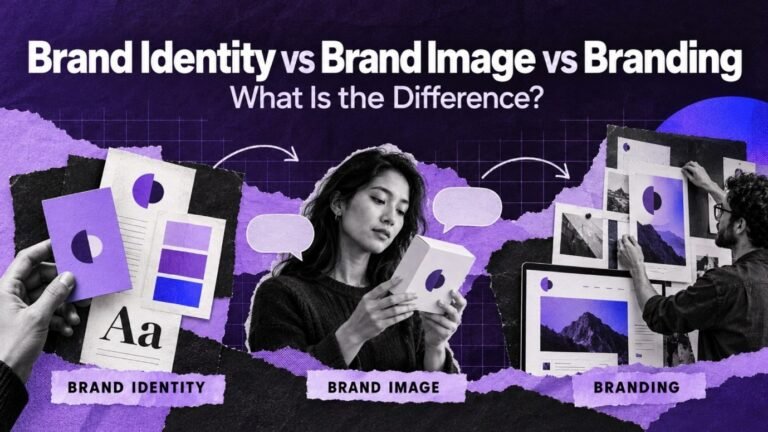
• Brand identity is the expression: logo, colours, typography, imagery and voice.
• Marketing is the distribution: the channels and campaigns that put the brand in front of people.
When startups skip the first layer, identity and marketing are built on guesswork. That is why two startups with similar products can get very different results.
Why Startups Need a Brand Strategy Early
Startups move fast, change direction and work with limited budgets. A brand strategy gives you a fixed point while everything else changes.
• It speeds up decisions. Designers, writers and agencies work faster with a clear brief.
• It improves conversion. Clear positioning makes your website and ads easier to understand, which helps more visitors take action.
• It builds trust with investors and hires. A coherent story signals a coherent business.
• It protects your budget. Fewer redesigns and fewer campaigns that “didn’t feel like us”.
• It makes performance marketing work harder. Ads perform better when the brand behind them is recognisable. Our post on branding vs performance marketing explains how the two support each other.
As we argue in why startups should focus on website and marketing from day one, early foundations compound. Brand strategy is the first of those foundations.
The Startup Brand Strategy Framework: 7 Building Blocks
The framework below has seven building blocks. Work through them in order, because each one depends on the previous answer.
1. Purpose, Vision and Mission
Start with why the company exists beyond making money.
• Purpose: the change you want to create. Example: “Make healthy snacking easy for busy families.”
• Vision: what the world looks like if you succeed, in five to ten years.
• Mission: what you do every day to move towards that vision.
Keep each to one or two sentences. If you cannot say it simply, it is not clear yet.
2. Target Audience
You cannot appeal to everyone, especially with startup budgets. Define:
• Your primary customer segment (the one you will win first).
• Their main problem, goal and buying triggers.
• Who influences or approves the purchase.
• Where they look for information and recommendations.
Turn this into one or two simple buyer personas. Use real conversations, not assumptions. Our research service covers audience and customer research for teams that want a structured approach.
3. Competitive Landscape
List the alternatives your customer considers, including indirect ones such as “do it themselves”, “use a spreadsheet” or “do nothing”. For each, note:
• What they promise.
• Who they target.
• How they look and sound.
• What customers praise and complain about.
You are looking for the space nobody owns clearly.
4. Positioning
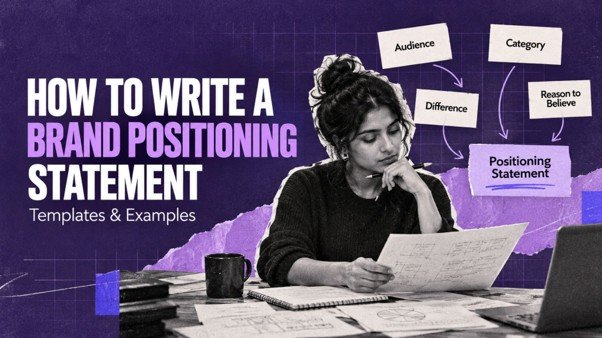
Positioning is the specific place you want to hold in your customer’s mind. A simple template:
For [target customer] who [need or problem], [brand] is the [category] that [key benefit], unlike [main alternative], because [reason to believe].
Example (illustrative): “For working parents in metro cities who want healthy snacks without planning, NutriNest is the subscription snack box that delivers balanced, kid-approved snacks every week, unlike supermarket options, because every box is designed by a paediatric nutritionist.”
For a deeper process, see the five key steps to effective brand positioning.
5. Brand Promise and Proof Points
Your brand promise is the experience customers can rely on every time. Proof points are the facts that make the promise believable: certifications, guarantees you can actually honour, founder expertise, process details, customer reviews and measurable product features.
A promise without proof sounds like marketing. Proof without a promise sounds like a spec sheet. You need both.
6. Brand Personality and Voice
Choose three to five personality traits and define what each means in practice. For example:
| Trait | We are | We are not |
| Friendly | Warm, simple, helpful | Childish or overly casual |
| Expert | Clear, confident, specific | Jargon-heavy or arrogant |
| Honest | Transparent about pricing and limits | Hype-driven or vague |
These traits guide how you write website copy, social posts, emails and even support replies.
7. Core Messaging
Finally, translate everything into words your team can reuse:
• A one-line tagline or value proposition.
• A short “elevator pitch” (two to three sentences).
• Three key messages, each backed by proof.
• Answers to the top five objections.
This messaging becomes the brief for your website, pitch deck and ads. VisionaryCue’s brand communication work turns this layer into messaging frameworks and voice guides.
How to Create Your Brand Strategy in 5 Steps
Knowing the building blocks is one thing. Here is how to actually produce the document.
Step 1: Run a Discovery Workshop
Bring founders and two or three key team members together for half a day. Answer the questions in each building block. Write rough answers first and do not debate wording yet.
Step 2: Validate With Real Customers
Speak to five to ten customers or prospects. Ask why they chose you, what alternatives they considered and how they would describe you. Compare their language with your workshop answers and adjust.
Step 3: Draft the One-Page Brand Strategy
Summarise everything on one page:
• Purpose and mission.
• Primary audience.
• Positioning statement.
• Brand promise and three proof points.
• Personality traits.
• Tagline and elevator pitch.
A one-page format forces clarity and makes the strategy easy to share.
Step 4: Test It in the Market
Use the new messaging in a landing page, a short ad test or sales calls for a few weeks. Watch which messages get replies, clicks and questions. Startups have an advantage here: they can test quickly.
Step 5: Turn It Into Guidelines and a 90-Day Plan
Once the strategy is stable, create basic brand guidelines (logo use, colours, fonts and voice) and a 90-day plan that applies the brand to your website, social profiles, sales materials and first campaigns.
Brand Strategy Template for Startups
Copy this simple template into a shared document:
Practical Example: Applying the Framework
Imagine an illustrative early-stage B2B SaaS startup in Noida that builds inventory software for small pharmacies.
• Audience: independent pharmacy owners in tier-2 cities.
• Problem: expired stock and manual billing errors.
• Alternatives: paper registers, generic billing software and large enterprise ERPs.
• Positioning: “Simple inventory and billing software built only for independent pharmacies.”
• Promise: “Set up in one day, in your language, with expiry alerts that save stock.”
• Personality: practical, patient, trustworthy.
With this strategy, the website headline, demo video and sales script all become clearer. The team stops trying to sell to hospitals and focuses its budget on the segment it can win.
Brand Architecture: One Brand or Many?
As startups add products, a new question appears: should each product have its own name, or should everything sit under the company brand? This is called brand architecture. There are three common models:
| Model | How it works | Best for |
| Branded house | One master brand, products named descriptively | Most startups; builds one strong brand with limited budget |
| Endorsed brands | Sub-brands supported by the master brand (“X by Company”) | Products serving different audiences that still benefit from parent trust |
| House of brands | Separate brands with little visible link | Companies targeting very different segments or price points |
For most early-stage companies, a branded house is the sensible default. Every rupee spent on marketing builds the same name. Consider sub-brands only when an audience is genuinely different and a shared name would confuse or hold back either product.
Brand Strategy on a Startup Budget
You do not need a large budget to do this well. Here is where to spend and where to save:
• Spend time, not money, on research. Customer conversations are free and more valuable than generic reports.
• Invest in positioning and messaging first. Clear words make every later asset cheaper to produce.
• Start with a simple identity system. A clean logo, two or three colours and one or two fonts are enough at launch.
• Use templates. Social, presentation and proposal templates keep quality consistent without a full-time designer.
• Bring in specialists for high-stakes moments. Fundraising, a major launch or a rebrand are good times to get outside expertise.
Common Brand Strategy Mistakes Startups Make
1. Starting with the logo. Visual identity should express strategy, not replace it.
2. Targeting everyone. Broad audiences lead to vague messages. Win one segment first.
3. Copying a bigger competitor. Their positioning fits their scale and history, not yours.
4. Writing for investors instead of customers. Pitch decks and websites need different language.
5. Treating strategy as a one-time document. Review it every six to twelve months as you learn.
6. Making promises you cannot keep. Over-claiming damages trust quickly, especially through reviews.
How to Measure Whether Your Brand Strategy Is Working
Startups rarely have budgets for brand tracking studies, but you can watch practical signals:
• Branded search growth in Google Search Console.
• Direct website traffic and returning visitors.
• Website conversion rate after messaging changes.
• Sales cycle length and win rate.
• The words customers use in reviews and referrals.
• Lead quality: are more enquiries a good fit?
If these move in the right direction, your brand is becoming clearer and easier to choose.
Conclusion
A strong brand strategy for startups does not need to be long or expensive. It needs to be clear. Define your purpose, choose your first audience, understand the alternatives, write a sharp positioning statement, back your promise with proof, give your brand a personality and turn it all into reusable messages. Then test it, refine it and apply it consistently.
When your strategy is clear, every design, website and campaign decision becomes faster and more effective.
Want help building yours? VisionaryCue’s brand strategy service turns research into positioning, channel strategy and a practical roadmap as part of the Power of 9 system. Book a discovery conversation to get started.
Frequently Asked Questions
What is brand strategy for a startup?
It is a plan that defines who the startup serves, what problem it solves, how it is different from alternatives and how it should look and sound everywhere. It guides decisions on design, website, content and sales, so the brand feels consistent and credible even while the company is small and changing fast.
When should a startup create a brand strategy?
Ideally before building a website, logo or launching paid campaigns. If you have already launched, do it as soon as you notice unclear messaging, inconsistent design or poor-fit leads. Even a simple one-page strategy created in the first months saves money on redesigns and campaigns later.
How much does a brand strategy cost in India?
It depends on depth. A founder-led workshop and one-page strategy can cost very little beyond time. Agency-led strategy that includes research, customer interviews, competitor analysis and messaging frameworks costs more but is more objective. Ask for a scoped proposal that lists deliverables before comparing prices.
What is the difference between brand strategy and marketing strategy?
Brand strategy defines who you are, who you serve and why you are different. Marketing strategy decides how to reach and convert people through channels, campaigns and budgets. Brand strategy comes first because it gives marketing a clear message, audience and promise to work with.
What are the key elements of a brand strategy?
The key elements are purpose, vision and mission, target audience, competitive landscape, positioning, brand promise and proof points, brand personality and voice, and core messaging. Together, they explain why your brand exists, who it is for and how it should communicate across every touchpoint.
Can a startup build a brand strategy without an agency?
Yes. Founders can run a workshop, talk to customers, study competitors and write a one-page strategy themselves. An agency becomes useful when the team lacks time, needs objective research, struggles to agree internally or wants the strategy translated into professional identity, website and campaign assets.
How long does it take to create a brand strategy?
A lean startup brand strategy can be drafted in one to two weeks. A research-led strategy with interviews, surveys and competitor analysis usually takes four to eight weeks. Testing the new messaging in the market for a few weeks afterwards is a valuable final step.
How often should a startup update its brand strategy?
Review it every six to twelve months, and whenever you change your target market, pricing model or core product. Startups learn quickly, so the strategy should evolve with real customer evidence. Keep the core purpose stable while refining positioning and messaging as you grow.
Does a brand strategy help with SEO and ads?
Yes. A clear strategy defines the problems, audiences and language your content should target, which improves keyword choices and content relevance. In ads, clear positioning and recognisable creative usually help people understand the offer faster, which supports better click-through and conversion performance over time.
What is a good example of brand positioning for a startup?
A good positioning statement names a specific audience, a clear need, a category, a main benefit, the alternative you replace and a reason to believe. For example, a startup might position itself as the simplest billing software built only for independent pharmacies, set up in one day.