Brand Identity vs Brand Image vs Branding: What Is the Difference?
“We need better branding.” It is one of the most common things business owners say, and one of the least precise. Sometimes it means a new logo. Sometimes it means customers do not trust the company. Sometimes it means the marketing feels inconsistent. These are three different problems, and they map to three different ideas: brand identity vs brand image, and the process that connects them, branding.
Understanding the difference helps you diagnose the real problem, brief designers and agencies properly and spend your budget on the right fix. This guide explains each concept in plain language, shows how they relate and gives you practical steps to close the gap between what you show and what people believe.
Quick Definitions
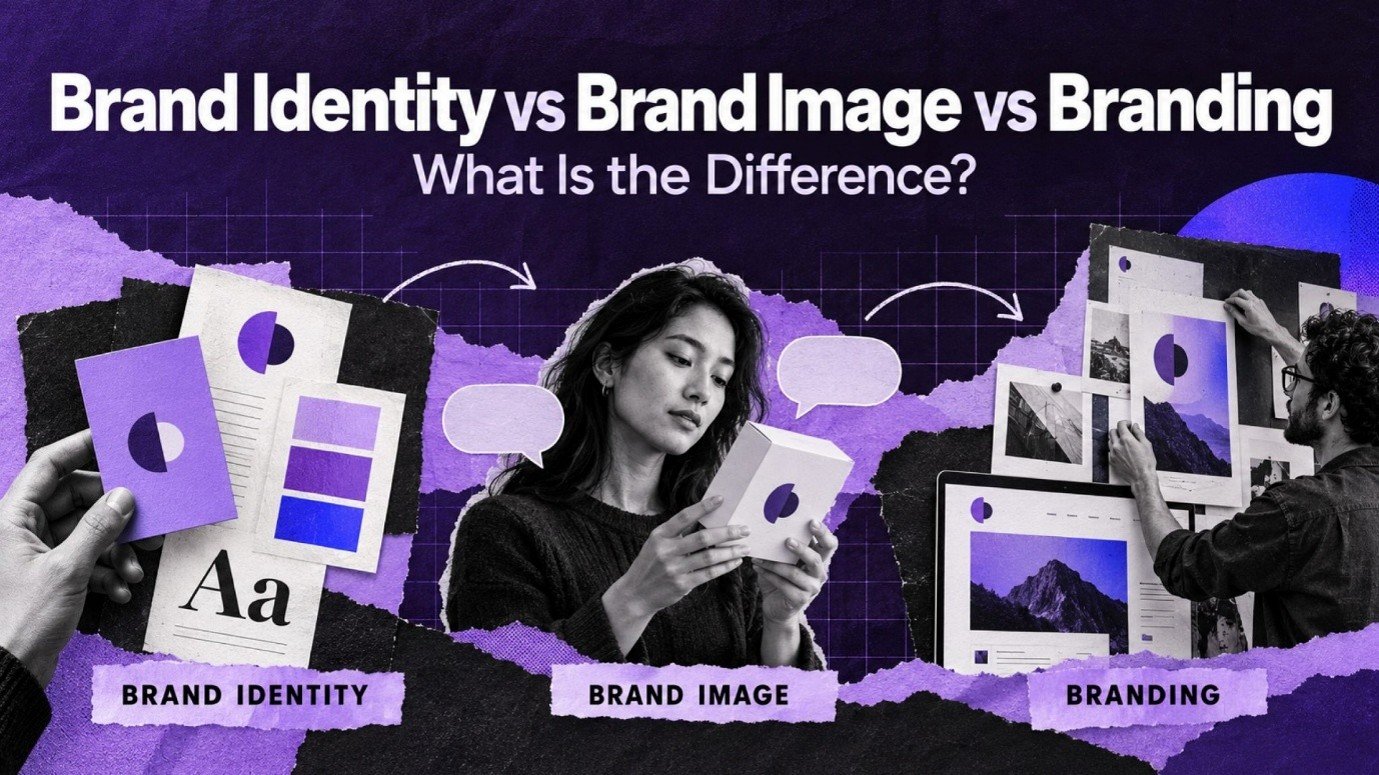
• Brand identity is what you create and control: the name, logo, colours, typography, imagery, voice and other elements that express who you are.
• Brand image is what people actually think and feel about you, based on every experience they have with your business.
• Branding is the ongoing process of shaping identity and experiences so that brand image moves closer to the brand you intend.
A simple way to remember it: identity is the message you send, image is the message people receive, and branding is the work of making them match.
What Is Brand Identity?
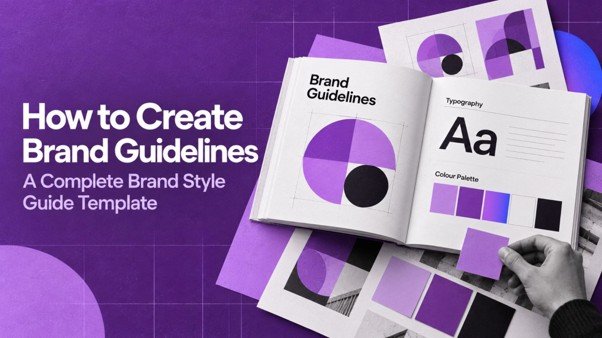
Brand identity is the set of deliberate choices a company makes to express its strategy. It is created internally, usually by founders, designers and marketers, and documented in brand guidelines.
Elements of Brand Identity
| Element | What it includes | Why it matters |
| Name | Company and product names | First signal of category and personality |
| Logo | Primary mark, variations, icon | Fast recognition across touchpoints |
| Colour palette | Primary and secondary colours with codes | Builds memory and emotional tone |
| Typography | Heading and body fonts | Shapes readability and personality |
| Imagery style | Photography, illustration, icons | Shows the world your brand lives in |
| Voice and tone | How you write and speak | Makes communication recognisable |
| Tagline | Short memorable line | Captures the core promise |
| Sensory cues | Sound, packaging feel, store design | Strengthens recall offline |
A strong identity is distinctive (not easily confused with competitors), consistent (used the same way everywhere) and flexible (works on a phone screen, a signboard and a WhatsApp profile picture).
VisionaryCue’s brand identity and design work covers these elements, and the Naturin case study shows how a distinctive logo was created to represent a brand consistently across digital and marketing touchpoints.
What Is Brand Image?
Brand image is the perception of your brand held by customers, prospects, employees and the public. It lives in people’s minds, not in your design files. It is shaped by:
• Product or service quality.
• Customer service and after-sales experience.
• Reviews, ratings and word of mouth.
• Social media comments and influencer mentions.
• Pricing and perceived value.
• News coverage and search results.
• How your staff behave and speak.
You cannot design brand image directly. You can only influence it through consistent identity and, more importantly, consistent experiences.
Brand Image Can Be Different for Different Groups
Your loyal customers, first-time visitors, employees and competitors may each hold a different image of your brand. A restaurant might be seen as “the best family place in the neighbourhood” by regulars and as “too expensive” by people who only saw the menu prices online. Research helps you see these differences clearly. Our brand research service uses audience and customer research for exactly this purpose.
What Is Branding?
Branding is the active process of building and managing a brand. It includes:
• Defining strategy (purpose, audience, positioning).
• Designing identity (logo, colours, typography, voice).
• Applying identity consistently across channels.
• Delivering experiences that match the promise.
• Listening to feedback and adjusting over time.
Branding is not a one-time project. It continues every day through your website, social posts, packaging, customer support replies and sales calls.
Brand Identity vs Brand Image: Key Differences
| Aspect | Brand identity | Brand image |
| Who creates it | The company | The audience |
| Where it lives | Guidelines, assets, design files | People’s minds and conversations |
| Control | Fully controlled | Only influenced |
| How it changes | Through deliberate redesign | Gradually, through experiences |
| How to measure | Consistency audits, guideline compliance | Surveys, reviews, social listening, search trends |
| Time frame | Can change quickly | Usually changes slowly |
Brand Identity vs Brand Personality
Brand personality is part of identity. It describes the human traits your brand expresses, such as friendly, expert, playful or premium. Personality guides voice, imagery and design choices. Identity is the full toolkit; personality is the character behind it.
How Identity, Image and Branding Connect
Think of it as a loop:
1. Strategy defines who you want to be.
2. Identity expresses that strategy visually and verbally.
3. Experiences (product, service, content) deliver on the promise.
4. Image forms in customers’ minds.
5. Feedback from reviews, research and sales shows how close the image is to the intent.
6. Branding adjusts identity and experiences to close the gap.
When the loop works, the image customers hold matches the identity you designed. When it breaks, you get a gap.
Illustrative Examples of Identity–Image Gaps
Example 1: Premium look, budget experience. A salon invests in a luxurious logo and interiors, but appointments often run late and staff are rushed. The identity says premium. The image becomes “nice place, poor service”. The fix is operational, not visual.
Example 2: Great service, dated identity. A family-run manufacturing company has excellent quality and loyal clients, but its website looks a decade old. New prospects judge it as outdated before speaking to anyone. Here, an identity refresh helps the image catch up with reality.
Example 3: Inconsistent identity, confused image. A startup uses three logo versions, different colours on each platform and changing taglines. Customers cannot form a clear memory of the brand. The fix is guidelines and consistent brand building.
How to Strengthen Brand Identity
1. Start from strategy. Define audience, positioning and personality before designing.
2. Create a core identity system. Logo, colours, fonts, imagery style and voice.
3. Document it in brand guidelines. Include do’s and don’ts.
4. Audit every touchpoint. Replace outdated assets.
5. Train your team and vendors. Consistency depends on everyone who creates content.
6. Use templates. For social posts, proposals and presentations, so quality stays high.
How to Improve Brand Image
Improving image takes longer because you need to change real experiences and perceptions:
1. Measure your current image. Use surveys, review analysis and social listening.
2. Fix the experience first. If complaints are about service, a new logo will not help.
3. Highlight proof. Share real reviews, case studies and process transparency.
4. Respond to feedback publicly. Thoughtful replies to reviews show you care. Our guide on dealing with fake online reviews covers what to do when feedback is unfair.
5. Tell your story consistently. Storytelling in digital branding helps people connect with the people and purpose behind the business.
6. Be patient and consistent. Perception changes through repeated positive experiences.
Related Terms You Will Hear
Branding conversations often include other terms that overlap with identity and image. Here is a quick glossary:
• Brand equity: the commercial value created by a strong brand, such as customers paying more, choosing you faster or forgiving small mistakes. Strong, positive brand image builds equity over time.
• Brand awareness: how many people in your target audience know your brand exists. Awareness is about reach; image is about what people think once they know you.
• Brand recall: whether people remember your brand without prompting when they think of a category. Distinctive identity elements improve recall.
• Brand reputation: often used interchangeably with brand image, but usually refers to wider public trust, especially among the media, regulators, employees and investors.
• Brand positioning: the intended place your brand holds in customers’ minds relative to competitors. Positioning sits upstream of identity.
• Brand guidelines: the document that records identity rules so anyone can apply them correctly.
A Simple Diagnostic: Which Problem Do You Have?
When someone says “our branding needs work”, use these questions to find the real issue:
| Question | If the answer is “no” | Likely focus |
| Do we have a clear, agreed positioning? | Teams describe the business differently | Brand strategy |
| Is our visual identity distinctive and modern? | It looks dated or similar to competitors | Identity refresh |
| Is our identity used consistently? | Several logo versions and colour schemes exist | Guidelines and templates |
| Do customers describe us the way we want? | Reviews and feedback show a different picture | Experience and communication |
| Do new prospects trust us quickly? | Long sales cycles, many trust questions | Proof, content and reputation |
Most businesses find they have one or two main issues rather than all five. Fixing the right one first saves time and money.
Brand Identity and Image in the Digital Age
Digital channels have made the gap between identity and image both more visible and faster to change. A single viral review, a poor customer service reply on social media or an outdated Google Business Profile photo can shape image within days. At the same time, digital channels give you more ways to show proof: video testimonials, behind-the-scenes content, detailed case studies and fast responses to questions.
For growing businesses, the practical lesson is to treat every digital touchpoint as part of the brand. Your website, social profiles, WhatsApp replies, Google listing and email signatures should all reflect the same identity and promise. Search results matter too: what appears when someone searches your brand name is often the first impression of your image.
Common Mistakes When Thinking About Branding
• Assuming a new logo will fix a reputation problem. Identity changes cannot hide poor experiences.
• Ignoring image research. Many businesses never ask customers what they think.
• Treating branding as a design-only task. Customer service, sales and operations shape image as much as design.
• Changing identity too often. Frequent changes reset recognition.
• Not documenting identity. Without guidelines, every vendor reinterprets the brand.
Conclusion
Understanding brand identity vs brand image helps you solve the right problem. Identity is what you design and control. Image is what people believe. Branding is the continuous work of aligning the two through strategy, design and consistent experiences. If your image is weaker than your reality, invest in identity and communication. If your image is weaker than your identity promises, fix the experience first.
The strongest brands are those where what they say, what they show and what customers feel all point in the same direction.
Want an identity that reflects who you really are? VisionaryCue’s brand identity and design service builds consistent visual systems grounded in research and strategy. Start a conversation with the team.
Frequently Asked Questions
What is the main difference between brand identity and brand image?
Brand identity is how a company chooses to present itself through its name, logo, colours, fonts and voice. Brand image is how customers and the public actually perceive the brand. Identity is created and controlled by the business, while image is formed by audiences through their experiences and conversations.
Is a logo the same as a brand identity?
No. A logo is one element of brand identity. A full identity also includes colours, typography, imagery style, icons, voice and tone, taglines and often packaging or physical design. A logo alone rarely creates recognition; the consistent use of the whole system does.
Can you control your brand image?
You cannot control brand image directly, but you can strongly influence it. Consistent identity, reliable products, good customer service, honest communication, helpful content and thoughtful responses to reviews all shape perception. Over time, these repeated experiences move your brand image closer to the brand you intend.
What are the five elements of brand identity?
Commonly listed core elements are the logo, colour palette, typography, imagery style and brand voice. Many brands also include the name, tagline, iconography, layout systems and sensory cues such as packaging texture or store design. Together, these make the brand recognisable across every touchpoint.
How do you measure brand image?
Brand image can be measured through customer surveys, review and rating analysis, social listening, branded search trends, net promoter score and interviews with customers and lost prospects. Look at the words people use to describe you and compare them with the personality and promise you intended.
What is the difference between branding and marketing?
Branding defines and shapes who you are, what you stand for and how you are perceived. Marketing promotes specific products, services or offers to drive action. Branding builds long-term recognition and trust, while marketing uses that foundation to generate attention, leads and sales in the shorter term.
Why is my brand image different from my brand identity?
Usually because experiences do not match the promise, the identity is applied inconsistently, or the identity does not reflect the real business. Other causes include outdated assets, poor reviews, unclear messaging and staff who describe the business differently. A brand audit helps you find the specific cause.
How long does it take to change brand image?
Changing brand image usually takes months or years, because perception builds through repeated experiences. Quick visual changes may improve first impressions, but deeper perception shifts require consistent service, communication and proof over time. Small businesses with close customer relationships can sometimes see change faster.
Does brand identity affect SEO or website performance?
Indirectly, yes. A clear, trustworthy identity can improve how people engage with your website and how often they search for you by name. Identity choices also affect site design, readability and accessibility. Very heavy brand assets, however, can slow pages, so design should balance style and performance.
When should a business refresh its brand identity?
Consider a refresh when your identity looks outdated, no longer fits your audience or offer, is used inconsistently, performs poorly on digital screens or after a merger or major shift in strategy. Always confirm the problem through research first, because sometimes the issue is image or experience, not identity.